Sometime in the mid-18th century, Moses Newell Senior (1716-1795) moved from Roxbury to West Newbury and purchased land, which is now Newell Farm on Main Street. His wife was Sarah Gerrish. In 1846, his son, Colonel Moses Newell, built the 25-room house now standing at 243 Main St.
This house was originally on the Newell property and stood closer to the street, with a well next to it. In 1820, the Commonwealth of Massachusetts allowed a petition by Col. Moses Newell, son of the earlier Moses, to divide his land in Parsons, which was the first, brief name of West Newbury. In the same year, half of the original house was moved across the street, and is today’s 238 Main Street. In August 1853, this lot, with this house on it, was sold to William F. Loring by Col. Moses Newell. It is said that the other half of the old house had burned.
For several decades in the 20th century, this house was owned by Norman and Ruth Moore, who moved to Newbury from Greenfield in 1944. Mrs. Moore wrote that the house was being used for guests and hired help, and half of the house burned while it was still on the farm.
Although little of the original framing of the house can be observed, the three-bay front facade and single-bay side depth of the front portion of this house indicate construction during the early Georgian era.
180:13: (9-8-1804) John & Lydia Orgood, heirs of Moses Newell, sold land, with this house, to Joseph Newell, for $220, all of the property of Moses Newell Sr., who had died.
206:230 (4-20-1815). Sale of 13 acres by Isaac Short to Joseph Newell, followed immediately by sale a sale of the same, by Joseph Newell to Moses Newell.
224:51. (3-25-1820). The Commonwealth of Massachusetts allows Moses Newell’s petition to divide his land in the town of Parsons. (*On February 18, 1819, the General Court of Massachusetts passed an act “to incorporate the town of Parsons.” On June 14, 1820, the legislature passed another act to change the name to West Newbury.)
224:51. (6-3-1820). Col. Moses Newell petitioned for land partition on a different piece of property. This house was then brought across the street.
485:150-52: (8-1853) Moses Newell sold to William Loring, “a certain lot of land with the buildings thereon,” for $325.00, bordered by the highway, beginning at the easterly corner of land owned by Joseph Stiles, with land of Moses Newell northwest. In the following deed, Loring received a mortgage from Joseph T. Gordon for $350.
820: 20-21: (August 12, 1871). William & Jane J. Loring took out a mortgage on the same lot of land. Sold back to Moses Newell. Joseph T. Gordon acknowledged full payment of the mortgage.
Twentieth Century Deeds
1946:142-144: Elizabeth M. Newell paid $1.00 to Charles H. & Bessie M. Danforth (executors?) and took over William F. Loring’s mortgage. 12-1-1908
Book ?: page 741: (11-7-1966) George F. Briscoe & Judith A. Briscoe sold to Philip K & Eleanor R. Bragg.
3460: 534-525: (4-25-1946) M. Abbie Urie (widow) sold to Norman & Ruth Moore.
5040:132: George F. & Judith Briscoe bought from Norman C. & Ruth E. Moore, with a cesspool easement, 2-25-1963.
3263:332: Price and Smith to Edward L. and M. Abbie Urie.
3110: 16-17: Howard Atwood (trustee for Elizabeth M. Newell) sold to Marion N. Potter (4-23-1937).
The house at 39 Pleasant St. was built for Joseph Jewett in 1732. Ownership by Jewett heirs continued by inheritance and marriage through the Hale and Cressey surnames until 1947. The following information is from the MACRIS site of the Massachusetts Historical Commission:
ROW.46 Langley – Jewett – Hale – Cressey House 39 Pleasant St., 1732
“This 1732 half-house, with a two-story ell, has nine over six windows on the first floor and Indian shutters. The inside has many interesting features, such as large beams and curved, corner arched framing, which is exposed. There are few, if any, other houses exactly like it in the community of this period.
“This house sits on the two-acre house lot, which was granted to Robert Hunter, the first settler. He died in 1647. It passed through the families of Langley, Hale, and Cressey, all prominent families in town, who always lived on this street and built many of the early houses here. Langleys and Hales are no longer there, but the large market and flower garden farm of the Cressey family is still operating on nearby lots on this street, as it has, for nearly 200 years, provided employment for many young people in the town who are interested in market gardening.”
Robert Hunter
This house sits on the two-acre house lot, which was granted to Robert Hunter, an early settler, who died in 1647. His will mentions his wife, Mary, to have lifetime use of the house and lands; the remainder went to Abel Langley, “if he shall settle here & carry well towards his Dame”. Otherwise, the remainder of the house was to be for the use of the poor of Rowley. (Source)
Abel Langley
Abel Langley agreed to the terms and had possession of the land in 1654. His wife, Sarah, died on May 16, 1666. His second wife was Mary, daughter of Thomas Dickinson, who died on April 22, 1673. Langley’s third wife was Sarah, daughter of Mark Quilter of Ipswich, who died on June 20, 1683. Langley’s will was probated on June 10, 1687. He had a son also named Abell, or Abel.
In 1725, the Quilter and Langley heirs transferred part of the estate of Abel Langley to Joseph Jewett (61:239) in a lengthy deed that is difficult to read. In 1732, Abel Langley and Sarah Quilter, daughter of Samuel Langley and other heirs, sold this house lot to Joseph Jewett (61-239), and Joseph Jewett built this house. (Source: Early Settlers of Rowley). In 1741, Abel (aka Abell) Langley, son of Abel Sr., quitclaimed “land, marsh, and meadows” to Joseph Jewett’s heirs (83:77).
Joseph Jewett, the early settler of Rowley (1609-1660), was a distinguished, wealthy merchant. Captain Joseph Jewett, son of Joseph Jewett, served as representative to the General Court in 1718 and 1719.
Deacon George Jewett
Deacon George Jewett (John-Nehemiah-Nehemiah-Joseph-Edward) was born in Rowley on March 18, 1746-7. He married on April 16, 1771, Sarah Noyes of Ipswich. Sarah Noyes Jewett died in Rowley of consumption on Feb. 12, 1824, aged 76 years. Deacon George Jewett died on May 5, 1829, at age 83. Their children, born in Rowley, were:
Sarah, born Jan. 11, 1772.
Susannah, born June 5, 1775, married Pemberton Hale in 1797.
Hannah, born Oct. 25, 1774; died Oct. 12, 1800.
Lucy, born Aug. 2, 1776; died June 26, 1796.
Dolly, born June 26, 1779; died Feb. 26, 1798.
The Cressey Family
The year following Deacon George Jewett’s death, the 1830 Rowley map shows the owner of this lot as Nathaniel Cressey (1800-1875), who in 1823 married Sarah Jewett Cresey, the daughter of Pemberton Hale. Hale moved to Rowley from Newbury and married Susannah (Jewett) Hale in 1797. This house, and the land across the road, came into the possession of Pemberton Hale through his marriage to Susanna Jewett, and in 1823 became the home of Nathaniel and Sarah Cressey. A house on the north side of their lot was constructed by Daniel Hale, son of Pemberton Hale.
This house stayed in the Cressey family for over a century. In the 1884 map, the house was owned by George Cresssey. In 1947, the estate of Bertha L. Holbrook (nee Cressey) sold the “Old Place” to Joseph and Lucy Dubuque. (Deed 3560:560)
The 1830 map of Rowley shows Nathaniel Cressey as the owner of this house.
Architecture of 39 Pleasant St.
The Rowley assessors’ page provides a date of 1732 for the construction of this house, which is compatible with physical observations. The house at 39 Pleasant St. is a two-over-two “half house” constructed in the early Georgian era, and features 1″ thick Georgian / Federal through-tenon doors throughout the house. The front entry is typical of early half houses with a landing and a winder stairway. The front, original part of the house is three bays on the front side (one door and two windows) and a single bay (one window for a single room) on the side. The house is slightly deeper than First Period houses.
Originally, the house had a central chimney stack, which was later removed, and a smaller brick flue was installed as the chimney for the boiler in the basement. The back walls of the rooms on either side of the house have decorative fireplace mantels attached to plaster walls, with no indication of a previous fireplace. An ell on the rear of the house appears to have been added not long after the construction of the front of the house. On the wall facing the rear of the former central chimney is a very wide mantel, which is again attached to a plaster wall, indicating the probable early existence of a large cooking fireplace before the chimney was removed. These three phantom fireplace mantels are an enigma.
The 1872 Rowley map shows Nathaniel Cressey as the owner of the house. The configuration of the rear ell is quite different than today. On this map, Pleasant St. is labeled High Street.
The 1884 map of Rowley shows George Cressey as the owner of this property. The rear ell has the present configuration, minus the shed porch on the west side. The map shows a barn that no longer stands. George Cressey is also shown as the owner of today’s Cressey Farm.
This house originally stood on Summer Street in Rowley. One and a half acres were granted to Richard Wicom, an early settler of the town (whose son, Capt. Daniel Wicom, was Quartermaster in King Phillip’s War). In 1661, Richard Wicom willed it to John Wicom (2-199), and he, in 1683, sold it to John Pickard (5-39).
The Wicom family still owned lots in the former common lands. Daniel Wicom2, grandson of Richard Wicom, sold various properties before moving to Norwich, CT, in 1714, where he bought a farm. The last sale of the former Wicom wood lots and planting lots in Rowley was by Richard Wicom of Newbury in 1730.
After purchasing the property in 1683, the Pickard family owned it for over 100 years and enlarged or constructed this house. In 1797, Abigail, the widow of David Pickard, sold seven acres to Hannah Pearson, wife of Daniel Pearson and daughter of Joseph Nelson, for $1000, “bequeathed to me by my late husband (163 -24). In 1802, Hannah Pearson sold it to Solomon and Jacob Lowell, “blacksmiths.” Jacob and Mary Lowell, in 1804, sold five acres of the property to Lieut. Daniel Foster of Ipswich (185-24), who, the following year, built a house which he sold in 1809 to Moses Dole, and moved to Newburyport.
In 1812, Solomon and Moses Lowell sold the remaining two and 2/3 acres “with the buildings thereon” to Moses Palmer for $200.00 (195-218). These 2 &2/3 acres had originally been the house lot of Richard Wicom. Mr. Palmer sold it to John White (233-70), and in 1829, White sold it to Thomas Cressey (266-224). Mr. Cressey in 1836 sold the same 2 2/3 acres, with a dwelling house, barn, and two joined shops, to Peabody Dole (316-28) for $36.00.
The house is moved from Summer St. to Main St.
Peabody Dole sold the old house from the two & 2/3 acre former Wicom lot on Summer Street to Moses Jellison, who in 1844, purchased 3 1/2 acres on Main Street from Nathaniel Bradstreet (565-90). Joseph Dummer wrote that Jellison “bought the Wicomb house on Summer Street of Mr. Dole, and half of the Todd house on Pleasant Street and moved them to this lot” on Main Street (Rt. 1A). This was probably in 1845, the same year that the other half of the house was sold (see below). The section of the Todd house is still attached to the right rear of the combined structure at 155 Main Street.
Age of this House
The year in which this house was originally constructed on Summer Street is unknown. The inventory created by the Rowley Historical Commission on the MACRIS site gives an approximate date of construction as 1750, whereas the sign on the front of the house reads “c. 1700.” Structural observations suggest that the north end of the house was possibly constructed in the late 17th century. The south side was added by the Pickard family in the 18th century, although the historical records refer to it as the Wicom house.
Rear view of the house. At some point in the early 19th century, the central chimney was removed and two Rumford fireplaces were incorporated into the rear walls of the house.
Structural Observations
This house has a slightly asymmetrical front facade and single-bay depth for the main body of the house, with a later wing on the right rear that was moved from the Todd House. The “broken back” saltbox shed on the rear left is believed to have been added in the 20th century.
The left (north) side of the main body of the house appears to be somewhat older than the right side. The windows on the downstairs left are about 4″ higher than the right, albeit identical. The front entryway is shallow, typical of First Period and other early single-bay houses before 1725. The winder stairs are unusually wide for the depth of the house, extending into what was probably once the central chimney bay, which was replaced by Rumford fireplaces and twin chimneys in the rear wall of the front of the house. A third chimney is in the rear right wing that was moved from the Todd house and still serves as the kitchen.
Summer beams in the front and upstairs rooms are wide and substantial, but are boxed, preventing observation of chamfers or decoration. Two summer beams in the basement and an unboxed beam in a closet have a 1″ chamfer. The exterior clapboards are each only about 3-4′ long, scarf-jointed, with less exposure on each board than usual. Short clapboards with scarf joints were used in the Colonial era, although the form persisted in some rural areas into the early 19th century. It is unclear when the existing clapboards were installed.
The roof doesn’t have rakes on the sides of the house. In the attic, new purlins were laid over the rafters, increasing the roof height by about 3-4″ to allow enough height for the front soffit, when the right side was added, or more likely, when the house was moved to its present location.
Subsequent History of 215 Main Street
In 1852, Moses Jellison sold the place to Charlotte Jellison (467-17), and she in 1855 sold the house and 1/2 acre to Nathan Todd (566-91), who in 1856 sold it to Daniel Morrison (567-91) Mr. Morrison in 1857 bought five acres of Joses Jellison (567-92). He also sold three acres in 1860 to Ezekiel Baley (614-65), who in the same year sold it to Frederick Bailey (614-66). Mr. Bailey in 1864 sold it to Oliver Blackington (715-171), who had bought in 1852, half of the house and 12 rods of land from Charles Cressey, the executor of the will of his father Richard Cressey, who had married Dorothy, daughter of Moses Bradstreet (302-227). In 1912, the heirs of Oliver Blackington sold 3/4 acres with the house to Loanda D. Pedrick (2171-239). She sold it to John N. Newell (2396-373) in 1918, and he sold it to Ernest C. Copper (2636-284) in 1925. In 1930, Copper sold it to Charles J. Henrich.
“Richard Wicom (aka Wickham, Wakam) had an acre and a half house lot in 1643. By deed, dated 26 June 1661, he gave his homestead and some other lands to his son John, in consideration of the support of himself and wife Ann, during life (Essex Deeds 2 Ips: 199). John Wicom sold this homestead in 1683 to John Pickard (Essex Deeds, 5 Ips. 39). He was buried 27 Jan. 1663-4. His widow, Ann, was buried on 25 August 1674. Their children were Daniel, born in England about 1635, who married Mary Smith; Thomas was buried 6 July 1660, and John, born about 1647, married Abigail Kimball.
“John2 born about 1647, married Abigail, daughter of Henry Kimball of Ipswich. He was living in Newbury on 5 September 1702. His homestead was near the present Dummer Academy (Governor’s Academy).” Other members of the Wicom family relocated to Connecticut, and the Wicom surname disappeared from Rowley history around the beginning of the 18th century.
“John1 Pickard, carpenter, son of Widow Ann Lume, married in 1644, Jane, daughter of Widow Constance Crosby. He was a representative in the General Court and prominent in the affairs of the town. He was buried on 24 September 1683. His will, dated 6 September, 1683 mentions, to wife (unnamed, “I give my now dwelling-house & buildings, orchards and Lands I live upon situate & Lying in the bounds of Rowley & Ipswich; also the Village Farm which Matthew Perry liveth upon with the privileges thereof all during the time of her natural life; also all my moveable estate to be at her dispose; always providing that my Dear wife be my sole executrix & that she receive all such Debts as are Due to me from any persons whatsoever.” To son John Pickard, what has already been given him and the farm at Johnson’s Pond, also the reversion of what has been given wife. To son Samuel Pickard, all the land between Samuel Dresser’s land and land of John Wicom, also the land on the other side of the street, of about four acres, also one-half of that land “I purchased of my son Thomas Hammond,” also after wife’s decease, the farm now in occupation of Matthew Perry….The inventory of his state, amounting to £1279, was taken on September 23. 1683. His widow, Jane, died February 22, 1715-16 age 89 years. His homestead in Rowley, from 1660, was in the “Morland” or “murlay” field.”
The year in which John Pickard Sr. died was the same year in which John Pickard (perhaps Jr.) purchased the house of Richard Wicom.
George Blodgette wrote in Early Settlers of Rowley, Massachusetts, “The house in which he died was on the site now (1932) occupied by the house of the late Daniel Harris Hale on Main Street. It may have been a part of the present house. The home farm extended easterly and southerly into Ipswich to include a large portion of Jewett’s Hill.”
The Todd House
Joseph Dummer wrote that Jellison bought the Wicomb house on Summer Street and half of the Todd house on Pleasant Street and moved them to this lot” on Main Street (Rt. 1A) after he purchased the lot in 1844. The Pleasant Street lot on which the Todd House originally sat was granted to James Bailey. In 1780, Hannah Bailey married Nelson Todd. Their son Henry Bailey Todd sold one-half of the house across the street, and a new house constructed in 1841, to Caleb Todd in 1845 (202-268). The other half of the house across the street was moved to 155 Main Street the same year.
Description from MACRIS
“ROW.51 Wicom, Daniel – Todd House 215 Main St r 1750: This 18th-century, two-story house, with lean-to and side porch, is one of the few of its kind in the town. The fact that the house was originally two separate houses on different streets in town, moved to this location at the same time, and incorporated into one house with such pleasing style, demonstrates the capabilities and engineering knowledge available among the settlers at that period in history.
“Several persons connected with the military once lived in this house, or in one half of it. Another was a blacksmith. All played equally important parts in the development of the community in their individual ways. Dan Wicom was listed as a carpenter. He was a direct descendant of Richard Wicom, one of the First Settlers. One half of this house was moved from the First Settler’s original lot on Summer Street. The other half of the house was moved from Pleasant Street and was called the Todd House. A part of the old meeting house was used in building the barn, which has since been taken down.”
Sign on the Wicom House
Present and past locations of sections of the Wicom House
End rafter in the Wicom House. A new roof was added, and the older purlins were replaced.
Another rafter in the north end of the Wicom house showing how the old purlins were removed and new purlins were added on top of the rafters, which allowed the roof of the conjoined front sides of the house to have enough height for a cornice.
Brick fill in the left end of the Wicom House
When the present owner was replacing clapboards on the north end of the Wicom House, he discovered several rows of bricks inside the wall, some of which fell out. The above photograph shows the three remaining rows of irregular bricks, which inexplicably appear to have been whitewashed on the outside.
Architectural historian Abbott Lowell Cummings, author of The Framed Houses of Massachusetts Bay, wrote, “Common, if not universal, was the infilling of the frame with brick and clay. For those areas of the frame where the fill might be exposed within, for example, on top of the plate, the bricks were either plastered over (as at the Boardman house in Saugus). Wall fill of brick and clay continued to be uniformly popular until into the eighteenth century at Massachusetts Bay.”
Handmade shoes were found concealed in the frame of the Wicom House. The sole of the unfinished shoe on the left was pegged to the upper.
When the present owner was repairing the north side of the Wicom House, he found shoes of early, primitive styles concealed in separate locations in the walls and floors. It is generally suggested that shoes were concealed to protect the occupants of the building against evil influences. Early settlers in Essex County were predominantly from East Anglia, where many concealed shoes are frequently found. Rowley was settled by families from the York, England region, where the York Castle Museum features a collection of concealed shoes.
Door to circa 1800 beehive oven in Wicom House
Panel wall and original door at 215 Main Street
Wicom-Pickard-Todd House Deed History
Book (b) & Page (p) followed by date and deed transfer
1978 (b 6445-p 719): Rosario DeGloria to Michael Harney
1977 (b 6338-p 652): Lowell Henrich to Rosario DeGloria
1930 (b 2873-p 511): Earnest Cooper to Lowell Henrich
1925 (b 2336-p 284): John Newell to Earnest Cooper
1918 (b 2396-p 373): Loanda Pedrick to John Newell
1912 (b 2171-p 239): Alfred Blackington to Loanda Pedriek
1877 (b 997-p 216): Oliver Blackington to Alfred Blackington
1864: (b 715-p 171): Frederick Bailey to Oliver Blackington
1860 (b 614 -p 66): (Oct. 19): Ezekiel Bailey to Frederick Bailey for $400, three acres with the buildings thereon.
1860 (b 614 -p 66): (Oct. 17): Daniel Morrison to Ezekiel Bailey for one dollar, three acres with the buildings thereon, bounded by Bradstreet and Jamin
1858 (b 565-p 92): (January 29), Daniel Morrison to Nathaniel Pickard, for $500, “a lot of land called the Jellison land, containing three acres, more or less, with the buildings thereon” bounded by Bradstreet and Jamin, “being the same” (this line was left unfinished).
1858 (b 565-p 92) Moses Jellison, shoe manufacturer, to Daniel Morrison, for $100, real estate bounded by land of Jamin and Bradstreet. (It appears that Daniel Morrison expanded on the 1/2 acre lot with this purchase of land of unstated size).
1856 (b 567-p 91): Nathan Todd to Daniel Morrison, merchant, the same property as below, for $1200.
1855 (b 565-p 91): Charlotte Jellison, single woman, to Nathan Todd, for $1200.00, half an acre with the buildings thereon, bounded by land of Jamin and Bradstreet.
1852 (b 467-p 17): Moses Jellison to Charlotte Jellison
1846 (b 565 -p 90): Nathaniel Bradstreet to Moses Jellison, “real estate” from the Bradstreet property, bounded by Jamin & Bradstreet for $100. LOT THE WICOMB HOUSE SITS ON NOW.
1837: (b 294-p 238): Peabody Dole to Moses Jellison
1836 (b 316-p 28) Thomas Cressey to Peabody Dole
1829 (b 266-p 224): John White to Thomas Cressey. Two & 2/3 acres with buildings thereon. “Bounded southerly by the road from the (Rowley) Common to Haverhill”.
1823 (b 233~p70): Moses Palmer to John White for $668.00. Two & 2/3 acres with buildings thereon.
1812 (b 195-p 218): Solomon Lowell to Moses Palmer for $1000. Two & 2/3 acres with buildings thereon.
1802: (b 171-p 90): Hannah Pearson to Solomon Lowell & Jacob Lowell for $1030, six acres with house and barn.
1797 (b 163 – p24) Abigail Picard to Hannah Pearson, seven acres with house and barn, for $1000, “bequeathed to me by my late husband.”
Probate 21778, 1775: David Picard to Abigail Picard (by will)
1744 (b 86 p 108): Thomas Wicom to Frances Picard (a lot of land for £24)
1683: John Wicom to John Pickard (house, barn & orchard)
Other deeds: Wikum, Wickham, Wycom
1659 (1:234) references lots of Richard Wikum and John Pickard lots
The Massachusetts Historical Commission’s MACRIS site refers to this as the Pierce House. On June 25, 1828, Nathaniel Noyes (son of Joseph Noyes Jr.) sold the house and land to Enoch Pierce, for $400, and the property remained in the Pierce family for 40 years. Prior to the Pierce ownership, the house and land had been owned by members of the Noyes family for 116 years.
The MACRIS page provides an estimated construction date of c. 1725, based on the year that streets running from High St. to the Merrimack River (including Bromfield St.) were laid out. Deeds for this lot include a sale by Joseph Knight to Joseph Noyes in 1712, the same year that dendrochronology tests indicate the wood for two oak corner posts was cut. The tree for the two oak chimney posts was cut in 1707.
The wood for some of the structural elements of the original one-over-one house is significantly older. The oak lentil for the parlor hearth appears to have been cut in 1678, and a cutting date of 1673 was determined for three structural features: a spruce attic tie, a spruce corner post, and the massive white oak summer beam in the parlor. The framing was boxed in the mid-18th-century Georgian fashion, but the frame in the downstairs parlor room was subsequently exposed.
The earliest history of this house is unclear, but the most likely scenario is that a 1678 oak post and beam one-over-one frame from another location was disassembled and reassembled at this location in 1712 by Joseph Noyes, a “house carpenter”. The frame was clearly exposed to the weather for several years, and the mortise and tenon joints show signs of displacement. The full basement and the large fireplace in the parlor were created in 1712. The earlier structure may have not included a chimney bay.
The house was significantly altered and enlarged around 1774. The chimney bay on the east side was rebuilt, a saltbox lean-to was added at the rear, and the stairway was altered to provide access to the attic over the lean-to. At the same time, the stone foundation for the large downstairs fireplace was replaced with brick arches. Modern fireplaces were constructed for the lean-to and the second-floor bedroom, and the chimney was reconstructed, as well as the two bake ovens.
Bromfield Street
“Cottle’s lane, from High street by Ezra Cottle’s dwelling house, to the dwelling house of Joseph Knight, Junior, on the highway near Merrimack river,” was laid out by the selectmen of Newbury March 6, 1718, although it was probably a private way long before that date. In 1764, the easterly side of Cottle’s Lane, was, by an act of the General Court, made the dividing line between the towns of Newbury and Newburyport, and the name of Cottle’s Lane was changed to South Street by the inhabitants of the last-named town. In 1851, “An Act to Annex a Part of the Town of Newbury to the Town of Newburyport ” established a new dividing line between the two towns, and, on November 1, 1852, by a vote of the city council of Newburyport, the name of South street was changed to Bromfield Street in honor of John Bromfield who, by his will, proved January 14, 1850, gave ten thousand dollars to the inhabitants of Newburyport, the income to be used for the purchase of shade trees and the improvement of sidewalks.” (History of Newburyport, Mass. 1764-1909 Vol. I by John. J. Currier)
Ownership of this property
Joseph Knight
John Knight (1594-1670), a tailor by occupation was a selectman and a prominent individual in the early settlement. He received permission to keep an ordinary in 1637 and held several offices, including selectman. When the town was moved in 1645 from its original location at “Old Town” on the Parker River to the west bank of the Merrimack River, Joseph Knight Sr. was assigned “a house lot at the new town joyning South Street.” (*South Street in 1645 was at the southern end of the new town, and is known today as Parker Street.)
John Knight’s grandson Joseph Knight (1652-1725), came into possession of several properties with multiple acreage in a series of deeds during a period from 1702-1709. This included a narrow lot “by ye highway of two rods wide next Merrimack River.” (Salem Deeds 22-146). In one of the deeds, he was granted a lot by his father “in consideration of his good service and dutiful obedience of me and also in consideration of a contract of marriage to be consummated with Deborah Coffin ye daughter of Tristam Coffin of Newbury.” (Salem Deeds 22-148). No mention of a building is found in these deeds.
The earliest known evidence for the Noyes’s ownership of this lot comes from the historical record of Cottle’s Lane, as recorded in Currier’s History of Newbury page 426: “April 4, 1710, voted to give eight pounds towards ye procuring of a way proposed for thru’ ye Little field provided ye sd way be laid out two rods wide the whole length from Ezra Cottle’s house to ye way by Henry Clarks next Merrimack River according to a vote of ye Town December 18, 1695. This way, called Cottle’s Lane, now Bromfield Street, Newburyport, was laid out, March 6, 1718-19, from High Street, by Ezra Cottle’s dwelling-house, to the dwelling-house of Joseph Knight, Jr., on the highway near Merrimack river.”
Joseph Noyes
Recorded December 29, 1712, Joseph Knight “blacksmith” conveyed to Joseph Noyes, “house carpenter” for £21, a certain piece of land containing one acre “bounded southerly by my own land, westerly by land of Henry Jacques, northerly by land of Joseph Hale, easterly by the highway, with all profits, privileges & appourtenances to ye same.” No mention is made of a house, but the deed states that “Joseph Noyes has been in possession of the premises.” (Salem Deeds 32-224). The low price may indicate that the lot was empty, or that it had on it an unfinished building that is today’s 8 Bromfield St. A year later when Joseph Knight sold land to Marvarick Gillman (Salem Deeds 26-223), the deed states that the lot was bordered by the land of Joseph Noyes northwest.
The Noyes family of Newbury
The Noyes family, like the Knight family, was significant in the early history of Newbury. Joseph Noyes Sr. (1686-1773), was the son of Lt. Col. James Noyes Sr. (1657 – 1725) and Hannah (Knight) Noyes (1664 – aft. 1723). The lieutenant was the son of Nicholas Noyes (1615 – 1701), who along with his brother James and father William were prominent figures in the settlement of Newbury in 1635. James Noyes Sr. is credited with the first discovery of lime in the Massachusetts Bay Colony. Major James Noyes was among 3 men chosen to settle and determine the bounds and measurements of the highways in the Town of Newbury.
Joseph Noyes (1688 – 1755), built (or rebuilt) the house in 1712. He married Elizabeth Knight. During his life in Newbury he inherited and purchased multiple parcels of land. Beginning in 1736, Joseph Noyes made many transfers of property unrelated to this lot, which is probably indicative of the year that he moved to Falmouth, ME, where he died in 1755. A few of the unrelated transfers are listed here. It is unclear if the house on Bromfield St. remained in the Noyes family until it was sold by Nathaniel Noyes in 1828.
He sold one half of a “certain messuage or tenament” and upland to Joshua Noyes for £165.00 (Salem Deeds 72: 171), having previously belonged to David Parsons.
He sold property to Samuel Bartlett for £142.00. ( Salem Deeds 72:159). The deed states that it was part of Deacon Nicholas Noyes’ freehold lot on the Artichoke River. He sold a second property to Samuel Bartlett for £103.00. (SalemDeeds 73:167)
In 1740, Joseph Noyes, now of Falmouth sold to Jacob Noyes, blacksmith, a portion of the saltmarsh and meadow land that had belonged to Joseph’s father, Cutting Noyes Sr. (Salem Deeds 80:200).
In 1746 he sold to “my kinsman” John Noyes one half of 14 acres of pasture land with orchards and buildings, “bounded northeasterly by my own land” (Salem Deeds 89:173)
In 1749, he sold some acreage to his son Cutting Noyes Jr. (Salem Deeds 120:257).
Noyes family’s possible line of ownership of this property
Joseph Noyes (builder of this house)
Cutting Noyes Jr. (1676 – 1757) and Elizabeth Tappan Noyes. He was the brother of Joseph Noyes. His estate on King Street (now Federal Street) was divided by his descendants in 1771, with the individuals each owning a small portion of the house. (Salem Deeds 129:198)
Jacob Noyes Sr. (1704 – 1786) and Jane Titcomb Noyes. Parents of Capt. Joseph Noyes Jr.
Nathaniel Noyes (1763 – 1847) sold the property to Enoch Pierce in 1828
The 1851 map of Newburyport shows “Heirs of E. Pierce” at today’s 8 Bromfield St., which was called South Street at that time.
Pierce ownership
On June 25, 1828, Nathaniel Noyes (son of Joseph Noyes Jr.) sold the house and land to Enoch Pierce, for $400. (Salem Deeds 253-253) bounded southeasterly by South St., “with the buildings thereon.” South St. was renamed Bromfield St. in 1851, soon after the 1851 “Plan of Newburyport” shows the “heirs of E. Pierce” as the proprietors. Pierce served under the command of Ezra Lunt in the Revolutionary War at the age of 20. On Sept. 20, 1872, John Pierce sold to Joseph Howard, $250 for the lot and buildings. (Salem Deeds 864-36). Captain Joseph Howard had a fish market at 11 Huse Wharf.
The early house
The two rooms in the one-over-one oldest part of this house measure about 19′ wide x 20 ft. deep. It is unclear if there was originally a chimney bay on the right.
The layout of the oldest section of the house at 8 Bromfield St. may have been similar to the 1654 Coffin house in Newbury. Image from “The Framed Houses of Massachusetts Bay, 1625-1725” by Abbott Lowell Cummings.
Section of oak summer beam in the downstairs older section at 8 Bromfield St. Dendrochronology indicates that it may have been re-used from a 1673 structure.
The exposed frame is weathered and gray, indicating that it sat for a period of time exposed to the weather, and the structural elements have remnants of old whitewash. The unchamfered massive oak summer beam is laid flat rather than vertically and measures about 15″ wide x 8″ high, an unusual installation. Summer beams in the 1667 Giddings-Burnham House and basement summers in the c1700 Perkins-Hodgkins House in Ipswich are also laid flatwise. In all four corners of the upper room in the oldest part of this house are massive gunstock posts, outlining the configuration of the two original rooms.
Downstairs summer beam & girt
Downstairs front corner post, plate, and girt
The weathering of the frame in the original core of this house indicates that it was constructed years or even decades before the lot was purchased by Joseph Noyes in 1712. The lack of a chamfer on the summer beam in the original structure suggests that it was constructed before 1680 or was a utilitarian building. It is unknown if the early house was constructed at this location or was moved here as has been conjectured. There is some separation in the joinery, and the exterior walls are out of plumb. This could have occurred if and when the structure was moved, but can also be attributed to the age of the structure and its early exposure to the elements, which resulted in the deterioration of some of the trennels that hold the joints together.
Masonry
The first-floor fireplace at 8 Bromfield St.
An outstanding feature of this house is its 9′ fireplace, examples of which are found from the late 17th Century into the first half of the 18th Century. The bricks are somewhat shorter in height and have clay mortar, which was used in the 17th Century and early 18th Century. The existing chimney bay is part of the 18th-century alteration, with the stairs ascending over the rear of two bake ovens.
Above the fireplace lintel is a plastered brick cove that supports the hearth of the second-floor fireplace. Abbott Lowell Cummings wrote that of the plastered coves he had observed, none dated to earlier than the last quarter of the 17th Century:
The 1678 Tristram Coffin House, Newbury (Dendrochronology has not been done on this house)
The circa 1700 Beniah Titcomb House, moved from Newburyport to Essex. (Dendrochronology has not been done on this house)
Bake ovens and a shelf in the rear wall of the first-floor front fireplace. Bake ovens shifted forward for safety in the 18th Century. Firebox openings before the 1720s usually measured seven to nine feet wide. (Reference: Antique Houses by Edward P. Friedland.)
Looking up into the flu of the downstairs front room fireplace, the metal bar on the right indicates the flu was constructed before 1740 when the swinging crane came into favor. (Reference: Antique Houses by Edward P. Friedland.)
A brick arch was constructed in 1774, with an unusual stone sidewall supporting the pre-existing first-floor hearth. Brick arches are commonly found between 1740 and 1830, according to historic masonry expert Richard Irons.
The second floor of the oldest section
18th-century Georgian interior finish is found throughout the house, with the exception of the first floor of the oldest section, where it was subsequently removed.
Fireplace with Georgian moldings on the second floor
Mid-18th-century knob and latch on the second floor. Known as open box locks, the knobs are cast brass on either side of the door, but the mechanism is iron. (Reference: Antique Houses by Edward P. Friedland.)
The other side of the same door
Right side chimney bay addition and lean-to
When the house was altered in 1774 the winder stairway was modified so that it forks to bears left to the second floor of the original house, while the rest continues straight to an upstairs hall which provides access to a finished attic room. This hall also connects to a triangular attic area that was created when the saltbox lean-to was added.
The post on the north wall where the chimney bay stairs meet the lean-to framing is not flared, is made of pine, and dendrochronology dates it to 1707. Assuming it was replaced when the lean-to was added, there would have been no reason to flare this post.
This scarf joint on top of an original gunstock post on the second floor may indicate that the framing of the chimney bay was replaced or altered.
Another view of the rear upstairs beam and scarf joint
These marks found along the length of the upstairs rear beam may have been made by the “dogs” that moved wood in antique sawmills.
The attic room over the old part of the house shows the original principal rafters (minus their purlins) and above them are the rafters for the lean-to.
A dip in the roof in this view from the rear of the house indicates where the chimney bay addition was added or altered.
The fireplace in the lean-to is relatively small and does not have a bake oven.
8 Bromfield in a 1980 photo on the MACRIS site.
Dendrochronology report
On August 1st, 2023, a selection of timbers was cored by William Flynt from the Joseph Noyes house, located at 8 Bromfield Street, Newburyport, Massachusetts for the purposes of conducting a dendrochronology study. All samples were mounted, sanded, measured, and analyzed by Mr. Flynt. A total of twenty samples were taken from the frame that appears to be constructed with a mix of reused and site-specific material. Species encountered included white oak, black ash, white pine, and spruce.
The wood for the parlor summer beam may have been cut in 1673 (although the evidence is weak). An oak southwest rafter and an oak purlin in the southeast bay returned dates of 1673 as well. The two oak chimney posts returned a date of 1707, as well as a black ash rafter on the west side. The oak parlor hearth lentil showed strong evidence of having been cut in 1678. The year 1712 was established for the southwest and southeast corner posts. A cutting date of 1773 was found for a spruce attic tie in the north wall, a spruce corner post, and a white pine corner post on the northwest side.
Discussion (by Bill Flynt): “While a relatively small structure, the Joseph Noyes house frame posed significant challenges due to the incorporation of clearly reused material, some quirky joinery where the entry bay frame joins the parlor/chamber bay at the plate level, and the use of softwood species in the entry bay frame but hardwood in the parlor/chamber bay. A review of the results of the dendrochronology testing suggests the reused material comes from a structure(s) constructed in the 1670s that gets used in conjunction with material felled during the period 1707-1712 (three being critical posts) most likely related to the initial build of the house.
“One would expect this structure to have included an entry bay, as it currently has, but it is difficult to explain why it may have been removed in the 1770s when the softwood framing was felled that currently supports this section. It is possible the evidence of weathering on some of the framing located on the backside of the upper chamber indicates that the structure was in disrepair by the early 1770s. It is worthy of note that one of the two samples taken from the removed lean-to rafters currently stored in the basement also indicates a 1773 felling date, suggesting that perhaps the entry modifications were undertaken at the time of the lean-to addition (though having only two samples from the lean-to roof is certainly less than ideal, especially when only one dated, for conclusively dating any construction event). “
The house at 254 Main St. is close to two other 18th-century houses still standing on the north side of Main St. Traditionally known as the William Follansbe house, it appears in the 1729 map of the Inhabitants of the West Parish of Newbury by John J. Currier. In the 19th Century, it was associated with the large W. Newbury comb industry, and in the 20th Century, it was the home of Pulitzer Prize winner Margaret Louise Coit, who married Albert Elwell of Maple Crest Farm on Moulton Street.
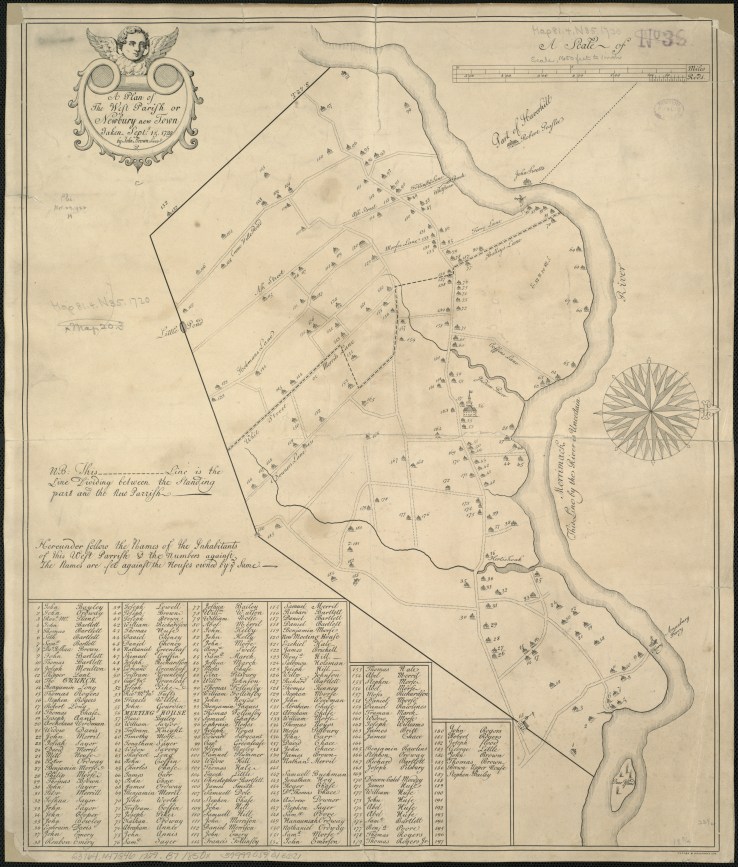
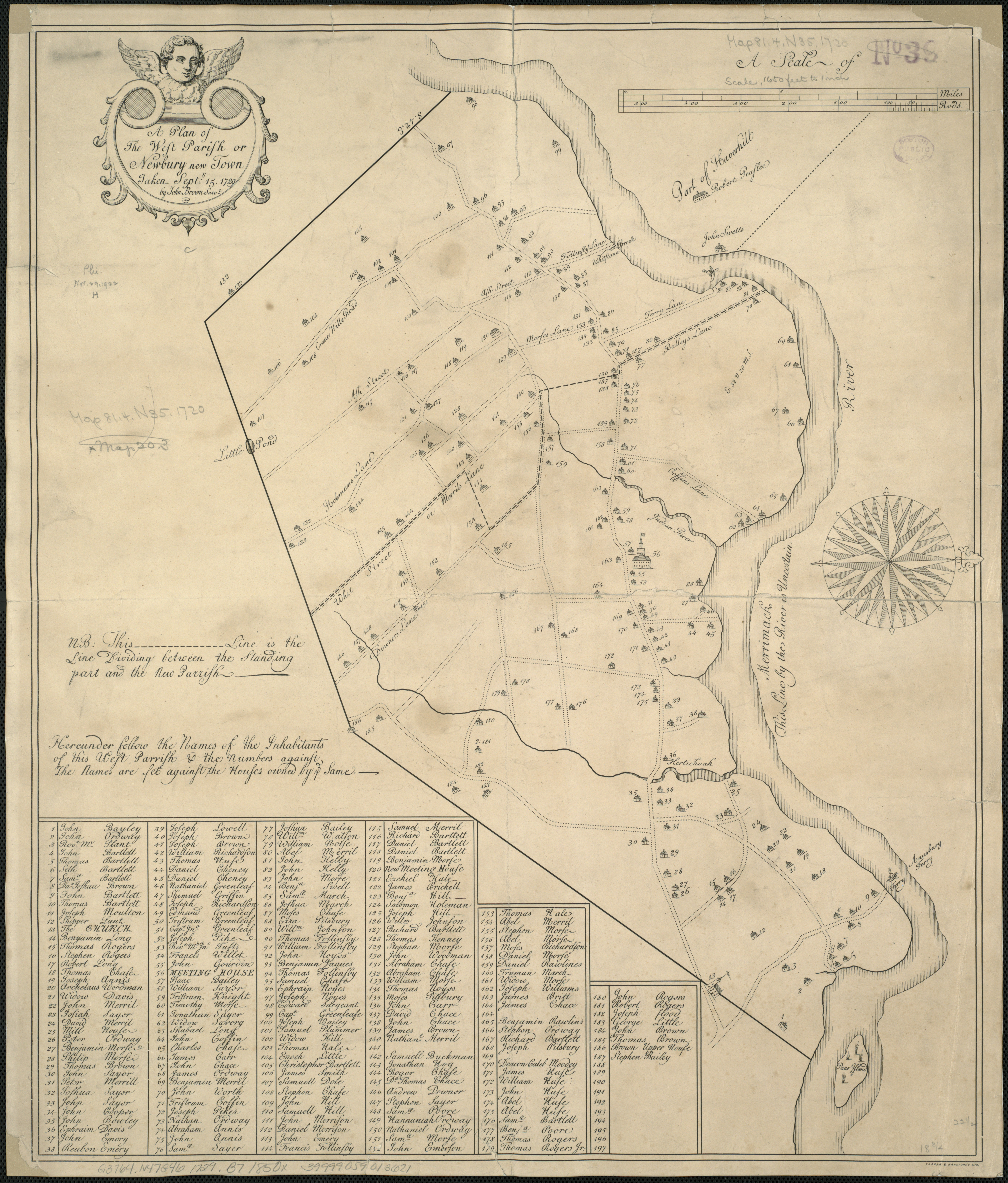
The 1729 Plan of the West Parish of Newbury identifies 90 as Thomas Follansbee at the corner of Main St. and today’s Whetstone St. (known then as Follinsby Lane). The house marked 91 immediately to the west was the home of William Follansbee. The next house on the west, marked 92, was the home of John Noyes and is probably no longer standing.
Thomas Follansbe Sr. (1637-1725) was the patriarch of all American Follansbes. Born in Rockwood Hill, parish of Hamsterly, Durham, England, first settled in Portsmouth and removed to West Newbury previous to 1677, with his wife Mary, who died. His second wife was Sarah. He had several children, including Thomas Jr. (1674-1755), who died in West Newbury.
In November 1713, Thomas Follansbe Sr. of Newbury, “joiner,” sold a dwelling house and all the land adjoining “upon ye plaine” for £56, to his son-in-law Thomas Chase, “house carpenter,” bordering on Moulton northerly (Essex Co. Deeds, 26: 281). Mention is made of “my new dwelling house,” but the photocopy of the deed is difficult to read. Two years later, Thomas Chase “for love” sold the same property to his son Aquila Chase, 2 Apr. 1713. (source: Seven generations of the descendants of Aquila and Thomas Chase.
William Follansbe (1700-1774), son of Thomas Sr. and Abigail Follansbe was born in Newbury and married Mary Robinson. He lived in West Newbury until at least 1757, when he sold 14 acres to William Haseltine and an 8-acre parcel to Ezekiel Bayley. Both bordered on the land of Francis Follansbe, and his homestead and other buildings are not mentioned in those deeds. William Follansbe’s gravestone, dated 19 Nov 1774, is in Hampstead, NH, where he and his last wife, Elizabeth (Gilbert) (Huse) Follansbe, apparently moved. She died there in 1794.
The 1850 map of West Newbury appears to show John Emery, comb maker, as the owner of 254 Main St. One of the Osgood houses to the right is the Thomas
Follansbe Jr. House at 262 Main St, the brother of William Follansbe. To the right is the Enoch Noyes-Loring house at 238 Main St., traditionally dated at 1746. The Noyes family was instrumental in the West Newbury comb industry.
The 1872 D.G. Beers Atlas of West Newbury appears to show C. H. Emery at the present 254 Main St. The lot was subsequently divided. A barn still standing behind the house at #260 Main St. appears to have once been John Emery’s comb shop.
In the 1884 West Newbury map, the home of J. S. Noyes has the same configuration as the present house when it had a side porch. The Noyes lot was split into two parcels in the early 20th Century, and the Moses B. Noyes house was replaced by today’s #260 Main St., constructed in 1912, according to the W. Newbury Patriot Properties site.
The area that became West Newbury was primarily a farming community until the late 1700s. Enoch Noyes began making horn buttons and coarse combs in 1759 at his home near 127 Main Street, and by the 1830s and 1840s, there were 32 comb shops in town. The following excerpt is from Establishment of the comb-making industry in America:
“From the comb shop of Enoch Noyes there sprang up in West Newbury an incredible number of other small comb-making enterprises. The very earliest of which any record remains were those of Ephraim Noyes, Major Josiah Hill, Deacon Tenny, John Parker, S. Follansbe, W. R. Noyes, Josiah Parker, Ephraim Parker, Nehemiah Follansbe, Parker Noyes, Amaziah Bailey, Thomas Carleton, D. N. P. Carleton, Isaac Emery, John Emery, John Chase, Moses Smith, Tappan Bailey, W. K. Bailey, James Chase, Abiel Lovejoy, John Sargent, Joseph Stanwood, Samuel Parker, Newman Follansbe, A. W. Noyes, William P. Bailey, John Carr, John C. Carr, Moses Carr, Moses Stiles, Joseph Danforth, M. K. Emery, Stan- ford Chase, G. F. H. Brown and S. Bailey. Many of these names are familiar to old residents of West Newbury today. These men also were farmers, for at that early date, farming was the principal occupation, but as the comb business grew, they gave more and more time to it. In all cases the work was done by hand at home, or in small shops similar to the old-time shoe shop.”
Newell-Hazen-Coit ownership
From MACRIS inventory for 254 Main St., West Newbury, WNB.218
“Moses Newell (1822-1868) and his wife, Catherine (1839-1918), lived across the street at Newell Farm, 243 Main Street (WNB.65), listed on the National Register of Historic Places in 1978. After Moses’ death, Catherine Newell continued to live at Newell Farm and retained ownership of a large parcel on the north side of Main Street. In 1903, Catherine Newell married again to Daniel M. Hazen (1830-1906). After Daniel Hazen died in 1906. Catherine Newell Hazen lived at 254 Main Street for the remainder of her life.
Upon Catherine Newell Hazen’s death, her son, Moses E. Newell of Nashville, Tennessee, inherited the property. In 1920, Moses Newell sold it to Disa L. Adams and her husband, Ulysses S. Adams. Ulysses Adams worked as a mechanic. At the time of the 1940 census, Ulysses Adams was unemployed; the census indicates the couple shared the house with the Fulton family, who had six young children. In that year, the property was sold to Grace L. Coit, who lived here with her husband, Archa, a real estate agent and stockbroker, and their daughters, Grace and Margaret. The Coit family lived here until 1957. Their daughter Margaret Coit (1919-2003) won a Pulitzer Prize in Biography in 1951 for her biography of South Carolina legislator John Calhoun. She also wrote a biography of Bernard Baruch. Coit moved to West Newbury after finishing college circa 1940 to join her parents, who had recently moved to West Newbury. Coit began her career as a newspaper reporter for the Lawrence Daily Eagle and the Newburyport Daily News while working on the Calhoun biography.”
This 20th-century painting of the house at 254 Main St.
254 Main St., W. Newbury map today
Structural Observations
The William Follansbe house is a fine, well-preserved early Georgian house. The form of the front entrance of the house is indicative of its antiquity and is more typically found in a first-period hall and parlor house, with a small front entryway, winding stairs, a massive brick chimney by the stairway, and a small door opening to stairs for the basement. We expect to see a center hallway if it were a typical Georgian house of the mid-18th Century. The “single pile” house is one room deep, measuring 36′ wide x 18′ deep. The rustic rear ell has low ceilings and exposed rough timbers. Sloping floors where it connects to the front section indicate it may be a repurposed utilitarian structure that is seen in early maps.
The chimney is supported by an arched brick vault. Abbott Lowell Cummings wrote that arched brick chimney vaults were invented in the last quarter of the 17th Century, and they are found throughout the 18th Century. The thin 18th-century bricks in the chimney stack have been repointed. The downstairs left side (“hall”) fireplace was used for cooking, and has a bread oven built into the face of the brick masonry. The parlor and upstairs fireplaces are smaller and shallower, and appear to have been influenced by the Rumford design, commonly found between 1790 and 1850, frequently found as updates to the original fireplaces.
Plastered ceilings without visible beams, as well as boxed corner posts, are found throughout the original (front) four-room house. The doors are typical 1″ Colonial with two panels. Georgian paneling and beading are evident throughout the front (original) section of the house. The attic purlins are sawn, almost square, and are regularly spaced.
William Follansbe House, West Newbury, MA
The front entrance and stairway in the William Follansbe house indicate its antiquity. In 17th-century entryways, builders gave no more space than was necessary for circulation between the hall, parlor, and stairway, with the central chimney inevitably abutting narrow winders. Georgian entryways typically featured central halls with ornamental staircases. Original treads and risers in earlier houses were inevitably replaced because of wear. The cellar was typically accessed through a door under the stairs, although the door in this photo was sealed at some later date.
View from the second floor at the front stairway, William Follansbe house. In most 17th and early 18th-century houses, the stairway to the attic was above the principal stairway. In the William Follansbe house, the attic is accessed by a narrow single run accessible from a door in a hallway behind the central chimney.
Arched chimney vault base at 254 Main St. in W. Newbury. In the 17th Century, stone bases were used for chimneys and fireplaces. Abbot Lowell Cummings wrote that arched brick chimney vaults were invented in the last quarter of the 17th Century, and are found throughout the 18th Century.
Second-floor fireplace in the William Follansbe house
Ceiling framing in the rear ell, William
Follansbe house
William
Follansbe house, 254 Main St., West Newbury
Research sources and methodology
This study and page were produced by Gordon Harris, also producer of the Historic Ipswich and Historic Massachusetts sites. Information is from a site visit, historic maps, deeds online at the Salem Deeds site, the West Newbury Patriot Properties site, and the recently revised MACRIS Form B inventory, which left undetermined the early history of the house. The present owners were told by the late Esther Osman, former chair of the W. Newbury G1973 historic inventory surveyor Esther Osman that the house dates to 1720, constructed for William Follansbe. This page may contradict some of the Form B inventories, yet to be resolved.
Deeds
1757: William Follansbe to William Haseltine, containing 14 acres and 25 rods, for “244 pounds lawful money,” bounded by Deacon John Noyes and Francis Follansbe; also an 8-acre parcel to Ezekiel Bayley for 57 pounds, both “which my honored father Thomas Follansbe gave to me.” Salem Deeds book 104 page 140. (Follansbe apparently retained his homestead)
1760: William Haseltine, 5 acres with buildings thereon to Benjamin Jaques for 130 pounds, 15 shillings, bordering on Francis Follansbe, Salem Deeds book 109 page 57.
1829: John Follansbe to John Emery, comb maker, lot with buildings thereon, “being the same conveyed to me by Mary Sargent,” bordering southwesterly by land of Moses Newhall, northwesterly by land of widow Sarah Osgood, and northeasterly by land of John Osgood, Salem Deeds book 254, page 177. (*The deed from Mary Sargent to John Follansbe has not been discovered. John Moody, Jr. (1787-1859) married Mary Sargent (1791-1867) in 1812. The Moody-Sargent house is at 411 Main St.)
1844: John Emery, comb maker, to John Moody, lot with the buildings thereon, Salem Deeds book 348, page 190 bordering on land of Emery, Newell and Osgood, “being the same transferred to me by John Follansbee.”
1860: John Emery to Joseph Newell, Salem Deeds, book 589, page 148: deed and release of mortgage, lot with buildings thereon.
1937, Helen Poor, widow, to Alonza Smith Salem Deeds book 03105, page 374 (“for reference, see deed of Joseph O. Noyes”, (borders southwesterly on land of Noyes et al.)
1940: Coit mortgage, Salem Deeds, book 3220, page 501, and Coit to Thurlow, (bordering southeasterly on land formerly of Moses B. Noyes)
1919: Newell to Adams, Salem Deeds Book 2468, page 546 (borders southeasterly on land of Moses B. Noyes)
1920: Sheehan to Newell, Salem Deeds, book 2413, page 125 (borders on land of Moses B. Noyes)
Records indicate that the house was built by Jacob Peabody (1) between 1685 when he reached the age of 21 and no later than 1689 when he died. The listing with the National Register of Historic Places estimates circa 1700, with structural indications of 17th-century construction. The 1985 MACRIS inventory with the Massachusetts Historical Commission written by Ann Grady gives a construction date of 1680 – 1700.
The massive frame, deeply jowled corner posts, and tall summer beams are also found in Topsfield’s 1683 Parson Capen House and the Zaccheus Gould House, a unique feature of local architecture. The First Period Buildings of Eastern Massachusetts resource sheet states, “On the basis of nearly identical molded post-heads in two Topsfield houses, we can assign both the ca. 1670 Zaccheus Gould House and the Stephen Foster House to one unknown carpenter.”
Until the end of the 20th Century, this small house sat on a stone foundation that is well-preserved in the front of the present extended building. A substantial stone shelf in the rear may have been used for keeping dairy products cool. After the house was moved to its current location a few yards to the right, the present owners turned the old foundation into a wildflower garden.
Although the old foundation has the dimensions of the preserved structure, cut-off purlins at the right end of the attic indicate that the house was once extended. A small addition on the right was removed when the current owners moved the house a few feet to make it part of their larger house on a modern concrete foundation.
The Jacob Peabody – Stephen Foster house in 1685 (MACRIS listing)
Listing on the National Register of Historic Places
The house is listed in the National Register as the Stephen Foster house after an 18th Century owner who married the sister of Jacob Peabody III. Ann Grady wrote the documentation for this house when it was listed in the National Register of Historic Places in 1980:
“The house is unusual in that it retains on the exterior the First Period single cell massing usually obscured by later additions. The retention of a branch on the rear plate to serve as a brace is an unusual example of vernacular carpentry practice. While related to the occasional use by First Period carpenters of ships’ knees to strengthen the frame, the branch brace represents the inventive solution of a single carpenter. A straight-run staircase has replaced the original chimney in the chimney bay at the right-hand end. On the second floor, the summer tie beam is embellished with 1 3/4” flat chamfers and a stylized variant of the lamb’s tongue stop.
Roof framing visible in the attic is comprised of principal rafters bridle jointed at the ridge, four large purlins per slope, and a purlin at the ridge. The purlins, 5 l/2″-6″ wide and 3″ deep, are hewn, like the major framing members. The roof over the chimney bay was rebuilt probably at the time that the central chimney was removed in the late 19th century. The cut off ends of the purlins which spanned the chimney bay remained trenched behind the rafters over the chimney beam.
The collar beam over the chimney tie was lapped and was a foot lower than the tenoned collar beams which remain in the two left-hand-most sets of rafters. In the left end wall, the studs are lapped behind the collar beam. Although traditionally dated c. 1700, the house has a completely oak frame of substantial dimensions. These characteristics of the frame might suggest either an earlier construction date or retardataire methods.”
Matching faces on the undersides of the wide second-floor floorboards are scribed with Roman numerals, sometimes partially hidden by the supporting floor joists.
Deed transfers
Deed of Jacob Peabody II transfer to Jacob Foster in 1717.
In 1717 Jacob Peabody II transferred some of the property to Jacob Foster, who married Rebecca Peabody (1). Their Son Stephen married Rebecca Peabody (2).
Lieutenant Francis Francis Peabody formerly Pabodie Born about 19 Feb 1614 in St. Albans, Hertfordshire, England. Husband of Mary (Foster) Peabody married 1650 (to 19 Feb 1698) Father of Jacob Peabody I. Died about 19 Feb 1698. By his will, dated Jan. 20, 1695, he gives his son Isaac Peabody his mills and mill yard on Howlett Brook, and the dwelling house by the mill.
Jacob Peabody 1, Born 28 Jul 1664 in Topsfield, Son of Francis (Pabodie). Died 24 Nov. 14, 1689. He married on Jan. 12, 1686, Abigail, daughter of Edmund and Mary (Browning) Towne, born Aug. 6, 1664. He died Nov. 24, 1689. His brother Isaac was joined with the widow in the administration of the estate. She maintained the children and paid their portions in due time. She married second, on Jan. 14, 1696, Thomas Perley.
Jacob Peabody II, Born November 9, 1689 in Topsfield, was the son of Jacob Peabody I and Abigail (Towne) Perley. Husband of Rebecca (Baker) Peabody, married April 30, 1711 in Topsfield. Father of Jacob Peabody III and Rebecca Peabody, who married Stephen Foster. Jacob Peabody II died July 24, 1740 in Topsfield.
Dr. Jacob Peabody III, Born about February 18, 1712 in Topsfield. Son of Jacob Peabody II and Rebecca (Baker) Peabody. Husband of Susanna (Rogers) Peabody married about Feb. 18, 1734 in Massachusetts. Father of Nathaniel Peabody Died 1758 in Leominster, Worcester Massachusetts. It was apparently this Jacob Peabody III and others transferred the house to Stephen Foster, who had married Rebecca Peabody, daughter of Jacob Peabody II.
Rebecca Peabody (2) (Jacob, Jacob, Mary (Foster) Peabody, Reginald Foster) married Stephen Foster of Ipswich on Apr 21, 1737. Rebecca Peabody, born 3 Feb. 1714/5, died 23 Mar 23, 1790. (Topsfield Vital Records).
Deacon Stephen Foster, born February 3, 1715, in Topsfield. died January 7, 1781 at about 71 years of age. (Caleb, Abraham, Reginald), born Ipswich, Mass., Apr. 24, 1710; married Apr. 21. 1736/7, Rebecca Peabody, daughter of Deacon Jacob and Rebecca (Barker) Peabody. He died January 15, 1781. There is no settlement of his estate on record.
The Will of Francis Peabody (aka Pabody, Pebody)
On March 7, 1671, the town voted that it was “willing that Lieut. Peabody shall set up a sawmill provided it does not do damage to any of the townsmen in their meadows.” The sawmill was built in 1672 on Howlett Brook at this location. (Read more)
Francis Peabody died in 1697/98. In his last will and testimony, he gave his mill and a dwelling house on the south side of Howlett Brook to his son Isaac. He gave the home of his son Jacob, deceased, to his grandson Jacob II, who was born only a few days before his father’s death in 1689. This suggests that the Jacob Peabody house was constructed by Jacob Peabody (1) between 1685 when he reached the age of 21 and no later than 1689 when he died.
Item: I do give to my son Isaac Pebody all the land y’ I do now live upon which I bought] of Mr. Simons & my will is y’ my son Isaac shall have all y’ said Land which lyeth on [ye] south side of ye brook.
Item: I do give to my Grandchild Jacob Pebody y* son of my son Jacob Pebody deceased, y* house which his father dwelt in together with all y* upland on y* North side of y* aforesaid brook, as also all y* meadow on y* same side of y* brook & y* bridge & so upward.
This is one of two old foundations on the east side of Old Right Rd. just above the Topsfield town line. The dimensions match the foundation of the Jacob Peabody / Stephen Foster house, and could have been its original location.
Original Location
In the Historical Collections of the Topsfield Historical Society, Volume 8, written in 1902 John H. Towne wrote that the early home of Stephen Foster had been taken down, a new one built in 1748, and that the old foundation still existed. An old cellar north of the Ipswich town line matches this description.
“Franklin Magraw, North St.: This two-story house was built for Stephen Foster in 1748 and was owned by Nathaniel Foster in 1798. In 1877, a part of the old house was taken down and the remaining part was remodeled by John H. Potter, who came into possession of the property by way of exchange with John Smith, the owner of the house on Central Street which he had just built. About five hundred feet in a northwesterly direction from the Magraw house is the cellar of the old Stephen Foster house. It is about one hundred and fifty feet over the Ipswich boundary line and is still a very deep cellar. The house was probably taken down not long after the new house was built.”
Potter sold to Franklin Magraw in 1901, Bk.l660, pg.438.
Magraw sold to Gerrish in 1902, and he to Mary Tarbox, Bk.1692, pg.226.
Tarbox sold to Fred Deering in 1906.
Fred Deering put the property in joint ownership with his wife, Della, who was the daughter of Francis Frame, and sister to the two Tilton wives, whose farms adjoined on Boston Street. Fred’s daughter, Lila, married James Wildes.
In 1944 the Deerings conveyed the property to Louis Greenwood, dog trainer, who has occupied the house for forty years and maintained dog kennels there.
The 1910 Topsfield map shows F. W. Deering as the owner of this home. and Franklin MacGraw owns a house on North St. near Ipswich Road across from Mill Pond.
Summer beam in the 1680 Jacob Peabody house. Although traditionally dated c. 1700, this First Period house has an oak frame of substantial dimensions, suggesting an earlier construction date. The summer beam is embellished with 1 3/4″ flat chamfers and a lamb’s tongue stop.
This unusual beam is exposed in the Jacob Peabody House and was made from a large branch.
Attic framing in the Jacob Peabody house. The framing and the roofing boards on the left side are original. A central chimney once extended through the right side of the roof, which has been replaced.
Brick noggin over a beam in the Jacob Peabody house.
“The c. 1718 frame, characteristic of late First Period treatment in its minimal decoration, nevertheless embodies certain features which link to earlier buildings in the Topsfield area, and even to the earliest buildings in Massachusetts. The massiveness of the frame and the use of beams which are deeper than they are wide relate the structure to the Parson Capen house of 1683. The deeply jowled corner posts are also found in the Stephen Foster house and the Zacchaeus Gould house, both c. 1700, suggesting a persistent local style of post treatment. The framing of door posts for interior doors into chimney girts and tie beams is a structural technique found in the earliest houses in Massachusetts, including the Fairbanks house, and is directly derived from English practices. Normally superseded by other methods of framing doors in later houses, the use of such door posts in the French Andrews House is a rare and conservative expression of direct transfer framing practices.
“The house is also significant for the survival of original finish in situ. The fireplace trim in the left-hand room and particularly the wide board feather-edged sheathing in the right-hand chamber are noteworthy and up-to-date examples of late First Period finish. On the basis of these features and the minimal chamfering of the frame, Cummings felt that the house was built after Joseph Andrews of Boxford acquired the property in 1718, although earlier, there was a single-cell house on the site owned in 1693 by John French Sr.
“The structure was restored in 1919 under the direction of George Francis Dow to its present First Period appearance. Diamond-paned, leaded glass casement windows were installed, and the chimney rebuilt from the attic floor with a decorative exterior pilaster modeled after the one on the Parson Barnard House in North Andover. First-period features are found in all four front rooms and the lobby. During the 1919 restoration, later finishes were removed and the framing exposed. The remaining original finish was carefully preserved, and new finishes matching the old ones were installed in many areas. The frame is a particularly massive one, the summer beams and tie beams being c. 8 inches wide and 12 inches deep. In both upstairs and downstairs rooms, front, rear, and end beams show peg holes for the studs that flanked the original windows. The original windows at the center of each wall were approximately 28 inches wide. Joist spacing in the first-floor ceilings is 21 inches on centers, while those of the second floor are spaced 25 inches on centers.
“In the left-hand room, the large kitchen fireplace with rear ovens appears to retain its original trim. Boards with a wide bead at the edge cover the jambs and lintel of the fireplace which is recessed about 8 inches, and is 58 inches high by 107 inches wide. The chimney girt and post are covered with boards also finished with a broad bead in this case almost a quarter round, at the edge. The rest of the framing is exposed. The summer beam has 2 inch wide flat chamfers and taper stops, while the girts are plain. The horizontal feather-edged sheathing which covers the outer walls was presumably installed during the restoration in 1919.
“In the lobby, vertical feather-edged sheathing enclosed the staircase, again presumably restoration finish of 1919. Cummings noted that posts for interior doors are framed into the chimney girts and tie beams, a very conservative construction technique. The door posts are molded along the outer edge. The attic displays a principal rafter, common purlin roof. In the cellar, there are two massive spanning beams each similarly decorated with 2 inch wide flat chamfers but for unexplained reasons running in different directions. There is a large fireplace with ovens in the right-hand cellar. Much of the firebox appears to have been rebuilt during the 1919 work. Because of the slope of the land, the right-hand cellar is at ground level.
“The house is associated with the early preservation movement, having been restored in 1919 under the supervision of George Francis Dow for Thomas Emerson Proctor. Dow, who was restoring the Parson Capen house further down Howlett St. at the same time was associated for many years with the Society for the Preservation of New England Antiquities. Dow made careful observations of the structure during restoration, recording the presence of early red paint or stain on the cover board of the plate hidden under a later cornice and the presence of an original attic window frame, “nailed to the exterior under-boarding through horns at the corners of the frame.” Dow installed a great deal of feather-edged sheathing in the house, both horizontal and vertical which resembles the surviving original finish to the extent that it is sometimes difficult to tell new from old. Most of what appears to be new sheathing, however, has an extra small molding on the feather-edge. Possibly, Dow was sophisticated enough to add the extra molding as a label so that the new sheathing could be readily distinguished from the old. “
“#86 HOWLETT STREET🙂 J. H. Towne writes concerning this site: “A one story house built for John French stood upon this site about 1675. In 1718 it was sold to Joseph Andrews and, some time before 1798, it was raised to two stories and the easterly end was added. In the spring of 1693 H0wlett Street was laid out as a town way which passed between the Corp. French house, and barn. The barn originally stood in the orchard on the westerly side of the road. Towne does not give any information on the house during the 19th century, but it was still in the Andrews family when he was writing, and in the 1908 valuation it was assessed to Joseph E. Andrews’ heirs. About the time of World War I, it was purchased by Thomas E. Proctor and added to his extensive holdings, which included all of Great Hill on both sides of the Turnpike. After Mr. Proctor’s death, the Trustee for his estate sold the house and four acres of land in 1949 to Chalmer J. Carothers Jr., who had to do considerable work to make it livable. In 1955 John Healey, Jr. acquired title and occupies at this writing. “(1989)
1986 image from Topsfield Historical Commission MACRIS inventory
“Here stands the French-Andrews house, a one-story house built for John French stood upon this site about 1675. In 1718 it was sold to Joseph Andrews and some time before 1798 it was raised to two stories and the easterly end was added. In the spring of 1693, Howlett Street was laid out as a town way which passed “between Corpll French his house and barne.” The barn originally stood in the orchard on the westerly side of the road. Here is where Thomas French’s son John lived. He was b. ca. 1637 in Ipswich, MA, and died ca. 1706 in Topsfield. Photos below are dated 1987 before remodeling.
“The French home of Thomas French and later belonging to his son John in Topsfield, MA, was built in 1675, and probably the second to the oldest standing French home in the country. The oldest French house in the U.S. is that of Richard French in Marshfield, MA. John was a tailor and moved to Topsfield, MA, about 1664. The house is located on Howlett St. This first period antique saltbox colonial house built in 1675 has been extensively restored. It is considered the oldest continuously occupied house in the town and is also part of the National Historic Registry. The home is very privately situated on 4 lush, botanical acres. Diamond leaded glass windows, 5 fireplaces, exposed beams and brick, wide pine floors, wide paneled wood walls and a wood roof all provide historical ambience. Each bedroom has its own full bath! A separate wing can be used as an in-law potential or as an extended master suite. The grounds are set up for entertaining and are professionally landscaped. ” House was for sale in 2006. and was again renovated. The House sold again in 2019.”
Rear of the French-Andrews house, 86 Howlett St., Topsfield
Architectural survey by Abbot Lowell Cummings, Architecture in Colonial Massachusetts, September 1974:
“TOPSFIELD: FRENCH-ANDREWS HOUSE (so-called), 86 Hewlett Street c. 1718: John French, Sr., had a dwelling here by 1693, presumably the same conveyed with his farm to John French, Jr., on December 2, 1701, in return for support throughout the balance of the elder French’s life. An agreement among the latter’s heirs on August 25,1707, would suggest that the dwelling deeded in 1701 was still in existence. That structure, however, as described in 1701, seems to have had but a single chamber, whereas the present house is of two-room, central-chimney plan and in terms of style and character of construction was probably not built until Joseph Andrews of Boxford bought the property from John French, Jr., on June 16, 1718. The house was purchased on October 11, 1917, by Thomas Emerson Proctor and restored in 1919 under the direction of George Francis Dow, at which time a modern leanto was added (although nineteenth-century photographs reveal the presence of an earlier leanto and a one-and-a-half-story ell at the west end) and a new chimney top constructed, modeled on that of the Parson Barnard House in North Andover. Privately owned.”
Floor layout of the Andrews House from the HABS drawings
The farm at 204 Dodge Rd. in Rowley is associated with several mills on the nearby Mill River. A chamfered First Period summer beam indicates that the oldest part of the house was constructed by Isaac Platts in the late 17th Century. The rare New England Dutch gambrel-roof barn has a ceramic tile silo. Nearby on the Mill River, several water-powered mills were constructed.
“The estate was granted to Isaac Platts (1672-1711), and sold by his grandson Isaac Burpee in 1764 to Jonathan Burpee (105-151). Jonathan and Jeremiah Burpee in 1764 sold the estate of 40 acres with buildings, including the cyder mill to Rufus Wheeler (127-122). “Rufus Wheeler built the present house after he bought the place. The heirs of Mr. Wheeler sold the estate to Charles and Caleb Chaplin in 1856 (722-219). Just beyond where the Daniels road enters, the lot was sold in 1830 by Matthew Stickney to Calvin and Caleb Chaplain (258-200).”
The 1830 map of Rowley shows the owner of this house on Dodge Rd. as Rufus Wheeler.
The 1856 and 1872 maps of Rowley show the Charles and Caleb Chaplin farm. The Chaplin family owned this property from the 1830s until almost the end of the 19th century.
“Caleb Chaplin in 1892 sold the estate to Brotherton Martin (1363-351). He in 1912 sold it to Fred W. Stuart of Beverly for a summer home (2180-416). Phineas Dodge sold (an additional) 17 acres in 1913 to Mr. Staurt (2192-457). He moved that house to a point near his house. The mill site and saw buildings were sold by Ernest and Sybel Walton to Fred W. Stuart (2204-70). With this purchase Mr. Stuart owned all of the land between the bridge and the southern side of the Chaplin Estate. All this he sold in 1929 to David H. Howie (2818-597).”
A house is shown at this location in the 1794 Plan of Rowley, with a sawmill some distance behind it. In the 1830 Rowley map, the owner’s name is Wheeler. In the 1856 and 1872 Rowley maps, the owner is “C. Chaplin.” The Chaplin family developed and grew the property from the 1830s until the end of the 19th century. Their deeds refer to part of it as the Stickney Farm. The ancient Stickney mill was along the Mill River behind the property.
Physical Description
The 1794 map of Rowley shows a house at 204 Dodge Rd., circled in white. The small house in the sketch is a typical 5 bay Colonial with a central chimney. Rufus Wheeler enlarged and constructed the present house after he bought the property from Matthew Stickney.
Stickney family history in Rowley
Benjamin Stickney, born 4 Apr., 1673, moved to Rowley before 1694, and lived with Daniel Tenney on Long Hill Road, Byfield Parish. From 1699 to 1726 he purchased of various owners, land at Long Hill and built a house on top of the hill in 1700. This was his home throughout the remainder of his life and his eleven children were born here, nearly all of whom married into Rowley families. His son Samuel built, in 1733, a cloth mill, and soon after, a sawmill, on the site of what was in later years been known as Dummer’s sawmill. In 1735, he built a house near the mill, which was his home during the remainder of his life. He died 4 Apr., 1778. His great grandson Matthew Stickney sold a part of the estate between this property and Daniels Rd. in 1830 to Calvin and Caleb Chaplin.
Platts-Burpee history
The 1677 Platts-Bradstreet House is located on Rt.1A, 233 Main St. in Rowley is home to the Rowley Historical Society. The name of Jonathan Platts first appears in 1690 as a keeper of cows at that end of Town. Eight children were born to Jonathan and Elizabeth Platts. His son, Isaac Platts (1672-1711) had a daughter Hannah who married Jonathan Burpee. Isaac Burpee in 1764 sold this property to Jonathan Burpee, who in the same year sold the estate of 40 acres with buildings, including the cyder mill to Rufus Wheeler.
Wheeler history
In the 1830 Rowley map, the owner’s name is Rufus Wheeler. His ancestor David Wheeler is said to have been brought to America in the ship Confidence, sailing from Southampton, England, April 24, 1638. He removed to Rowley, Mass., before 1669, the year his son Joseph was born. At a meeting of the Inhabitants of the Towne of Rowley, March 16, 1702-3, it was voted that the inhabitants of the Towne of Rowley living in the neighborhood near Long hill could join with the farmers of Newbury could build a new Meeeting House in what became the parish of Byfield. The Wheeler family were prominent members of the parish, and several settled in a nearby part of Rowley that is now part of Georgetown known as Wheeler’s Corner.
Chaplin history
All branches of the Rowley branch of the Chaplin family are descended through the sons of Hugh Chaplain, Joseph, John and Jeremiah. The oldest section of the Chaplin–Clarke House at 109 Haverhill St. was built c. 1670 by Joseph Chaplin. John Chaplin, born 11 December, 1646 and his brother Jeremiah removed to the better farming area in the western part of the town at today’s intersection of Rt. 1 and Rt. 133. The neighborhood came to be known as Chaplinville, from the number of their descendants who have lived there. John Chaplin joined with his neighbors in setting off Linebrook Parish in June, 1746. He became a prosperous landowner, and lived to a great age, dying 24 January, 1767, in his ninety-third year.
The 1832 map shows Chaplinville at Rt. 133 and Rt 1; Rooty Plain at Rt. 133 and Boxford Rd., and Linebrook Parish on Leslie Rd. at the original location of the Linebrook Church
Caleb Chaplin Sr., born 20 Mar 1764, was the son of John Chaplin and Hepsibah (Jewett) Chaplin. His son Caleb Chaplin (1783 – 1856) married Sarah Davis (1783 – 1857 ) of Topsfield. They had two daughters, Betsy and Sarah, and three sons, Charles, Caleb, and Calvin (1805-1879). On May 31, 1866 Calvin and Hannah Chaplin deeded half of their land and house to Charles Chaplin (Salem Deeds 704, 288). Charles and Calvin Chaplin are both listed in County records as living at Rooty Plain, occupation farmer. Rooty Plain was a small community on Rt. 133, in the vicinity of Dodge Rd., Boxford Rd. and the Mill River.
Stuart, Howie and subsequent owners
The barn and silo were constructed by Fred W. Stuart of Beverly, who owned the farm after the Chaplins, from 1892 until 1929. Stuart owned the patent for a “shoe last” with his son, Maxwell A. Stuart, and owned the F. W. Stuart & Co. at 16 Congress St. in Beverly, manufacturer of shoe lasts. Stuart’s accumulated properties included the Pearson Stickney and Dummer mill site on Glen St., as well as the nearby properties at 45 Long Hill Rd. and 66 Long Hill Rd. The 1920 tax assessment for Fred Stuart, from the Annual Report of the Town of Rowley, shows the value of the new barn being considerably more than the house. In the 1910 assessment, the house was valued at $850, but the larger of two barns was valued at $300, the same as in 1900. David Howie’s 1940 evaluation was $1000 for the house, and $2800 for the barn
He sold the farm and surrounding properties in 1929 to David and Harriet Howie, who owned the property from 1929-1951. Mr. Howie was employed in Boston and they lived in Rowley in the Summer. Rowley tax assessments for the period show a long list of properties throughout out the town that Howie owned. David Howie sold to James and Anna Hall, August 1951. The property was sold to Anne and Richard Harnett as Rowley Farms Trust in 1980, who sold it to the present owner in 2009.
204 Dodge Road, side of the house facing the barn (photo courtesy Redfin). An upstairs bedroom in the left side has a First Period (1620-1720) chamfered summer beam with a tapered stop.
204 Dodge Rd., side of the house facing away from the barn and driveway.
Physical Description
Outwardly, the original front of the house faces away from the driveway and barn, but the opposite side has been modified so that it appears almost identical. The present downstairs hall is continuous from each of these doorways. An 18th or 19th Century stairway to the second floor descends toward the doorway opposite the barn and driveway. Although much of the early fabric has been removed, surprisingly, a First Period chamfered summer beam with a lambs tongue stop is exposed in the right upstairs bedroom, confirming that part of the present house dates at least to the 1735 home of Samuel Stickney.
The image in the 1794 Rowley map indicates a five bay house with a central chimney. A massive stone foundation for a central fireplace exists in the cellar. Based on these observations, the right side was a one-over-one very late First Period half house that was doubled in width after Rufus Wheeler purchased it in 1764. The central fireplace and chimney were later removed to create a central hallway during ownership by the Chaplin family. Further modifications and additions date to after the property was purchased by Fred Stuart in 1913, and by David and Harriet Howie, who owned the property from 1929-1951.
A transverse chamfered summer beam with tapered chamfer stop in the upstairs room at 204 Dodge St. in Rowley is the only visible indication of First Period construction. House frames built from ca. 1700 to ca. 1715 generally exhibit less decorative embellishment. By 1725, the frame was likely to be enclosed rather than exposed.
Fireplace wall at 204 Dodge St. in Rowley. The present chimney is on the outside wall of the original house, which has a single floor addition. A small chimney serves the furnace. The stairway at 204 Dodge St. was constructed after the central chimney was removed in the 19th Century.Barn and cupula at 204 Dodge St. in Rowley
Barn and silo
The 1920 tax assessment for Fred Stuart, from the Annual Report of the Town of Rowley shows the value of the new barn as $2500, considerably more than the house. In the previous 1910 assessment, the house was valued at $850, but the larger of two barns was valued at only $300, the same as in 1900. The next owner David Howie’s 1940 evaluation was $1000 for the house, and $2800 for the barn. This shows conclusively that the gambrel barn was constructed between 1910 and 1920.
By the late 19th Century, this property had become a large and profitable farm. The tall gambrel roof barn measures approximately 36′ wide x 60′ long and is in unusually good condition, with 20 oversized stalls, and an attached glazed tile silo of the same period. The present owner was told that the barn was built in the 1920s during the depression and took 5 years to build. The owner at that time hired out-of-work people to build it. Rowley tax assessments show that the barn was constructed during the ownership by Fred W. Stuart between 1910 and 1920.
There are two forms of gambrel barns, the Dutch gambrel, in which the eaves flare slightly upward past the walls, and the English gambrel, which appeared in the late 19th and early 20th Century, and has straight eves. The gambrel barn became popular in rural farm areas. The development of balloon-frame construction and the use of trussed rafters allowed clear spans above the stalls for large amounts of hay, using mechanized hay trolleys that came into favor. Driven by the need for massive hay storage, the English gambrel roof barn style had its “heyday” between the first and second world wars. Most of the approximately 600 American Dutch-style gambrel barns date to the 18th and 19th century, many concentrated in the Hudson Valley. It is unusual to see a large Dutch style gambrel roof barn in the North Shore area. A large gambrel barn is at Appleton Farms in Ipswich, but does not have the Dutch curves at the ends of the rafters.
Attached to the barn is a silo with glazed ceramic tile walls. Intensive dairying operations in New England during the late 1800s resulted in a switch from hay to corn. Silaging made possible the fermentation of the crop while it was green, instead of waiting for it to dry in the fields. Round masonry silos were structurally suited for the high pressures exerted by tall stacks of heavy wet corn; They resisted wind, eliminated dead corners, and made the threat of fire negligible. For a few decades, companies offered gas-fired ceramic hollow blocks in various color schemes for silos and surrounding buildings. Commercialization of these kits proved to be short-lived, as farmers found them overly expensive, and in the early 20th Century, farmers began using more-affordable concrete blocks.
The W.S. Dickey Clay Manufacturing Company manufactured and promoted its promoting “tight as a jug” vitrified salt-glazed structural clay tile silos.
Dickey’s competitor was Dennison’s Everlasting Silos of Minnesota. Due to the cost of shipping, clay-fired tile silos are relatively rare in New England.
Town of Rowley Annual Reports: Tax evaluations for 1890, 1900, 1910, 1920, and 1940. (Local History Room, Rowley Public Library).
Deed History
The earliest part of this house was constructed by Isaac Platts before 1720, and was sold by his grandson Isaac Burpee in 1764 to Jonathan Burpee: Salem Deeds 105/151.
Jonathan and Jeremiah Burpee in 1764, 40 acres with buildings, including the cider mill to Rufus Wheeler: Salem Deeds 127/122
Matthew Stickney to Calvin and Caleb Chaplain (property across the street): Salem Deeds 258/200
Fitch Poole, Morrison, Nutting et al to Charles Chaplin an 8 acre lot, “being part of the Stickney Farm…the right of way leading to Stickney’s Mills” February 6, 1837, Salem Deeds 297/20
Henry Poor et al to Charles Chaplin, “part of the Stickney Estate which is described in the deed of Fitch Pool and others to Chaplin this day,” Feb. 11, 1837 Salem Deeds 299/208
Calvin and Hannah Chaplin to Charles Chaplin, May 31, 1866: 1/2 undivided. House and land. (Salem Deeds 704, 288)
Heirs of Wheeler, sale of estate to Charles and Caleb Chaplin in 1856: Salem Deeds 722/219
Ada Martin to Fred Stuart 14 acres with the buildings thereon, “8 acres conveyed to me by Charles Chaplin, and all the real estate that was conveyed to me by Caleb S. Chaplin by his deed dated December 5, 1892” Salem Deeds 2180/461
Phinneas Dodge to J. W. Stuart, a parcel of land, January 21, 1913: Salem Deeds 2192/457
Fred W. Stuart to David Howie: land granted to Stuart referring to deeds of Phineas Dodge and Ada Martin, December 9, 1927: Salem Deeds 2749/115,
Stuart to Howie: September 10, 1929 Salem Deeds 2818/597. (Cambridge residents Harriet and David Howie also owned the property at 66 Long Hill Rd.)
David Howie to James and Anna Hall, August 1951: Salem Deeds 3841/247 and 6705/44
MacNeil to Anne and Richard Harnett as Rowley Farms Trust, parcel one of seven, “with the buildings thereon” on the westerly side of Dodge Rd., May 1980: Salem Deeds 6705/37 and 6780/176. The 2005 Rowley Reconnaissance Report refers to this as the Hartnett Farm
The house at 202 Main St. in Rowley sits on property that was for over a century the homestead of descendants of early settler Eziekiel Northend. The last member of the family to own the ancestral home was Northend Cogswell, who relocated to S. Berwick Maine. The heirs of Northend Cogswell sold the entire estate in 1837 to Hannah and John Francis Jamin. They arranged for the removal of the 1720 Northend house in 1838 and it was moved to 169 Main St. where it has for many years been the Rowley Pharmacy. The Jamins built the present house on this location in 1839.
The Jamins built another new home across the street at the present location of Pine Grove School, and in 1849 sold this house with 4 acres to Deborah Pike, wife of Rev. John Pike, pastor of the First Church. In the 20th Century the house served as the Catholic Church rectory.
This view from the south side of 202 Main St. shows that its two fireplaces are located at the rear of the house. The rear ell is a later addition.
The house has a traditional 5 bay two-story façade with a mix of Federal and Greek Revival elements. The front entry portico has columns, but lacks transoms and sidelights found during those periods. First floor rooms have 10′ ceilings. The two fireplaces are located at the very rear of the house, with tall chimneys rising above the height of the peak, similar to several houses on Main and Summer Streets. Most have stated construction dates ranging from 1800 – 1834, but two are listed as 1750. Paired rear fireplaces seem to have been very popular in Rowley.
Ezekiel Northend, the first of the name and family in this country, settled in Rowley a few years after its first settlement by Rev. Ezekiel Rogers and his associates in 1639, and was a prominent man in the town. He gave to his son and each of his daughters from one hundred to one hundred and fifty acres of land upon their marriage.
Ezekiel Northend (3rd generation), the son of Capt. Ezekiel Northend, was born January 25,1696-7. He married Elizabeth, daughter of Rev. Edward Payson on March 30, 1726, and died October 18, 1742. Elizabeth, the widow of Ezekiel Northend died 9 May, 1787. The book, Early Settlers of Rowley records, “His homestead in Rowley was on Main Street and was later owned by Rev. John Pike. Ezekiel Northend was a member of the General Court from 1715 to 1717, and served the town as selectman several terms. His son was a selectman and captain of the military company. *Sarah, the daughter of Ezekiel Northend, married Thomas Mighill, Nov. 13, 1750. The Mighill-Perley house is still standing at 100 Main St.
In 1761, Sarah Northend, a daughter of Nathaniel and Elizabeth Northend, married Dr. Nathaniel Cogswell of Ipswich, and they made their home here. Sarah was born November 19, 1738, and died March 8, 1773 at age 34. He lived to an old age and died May 23, 1822 at age 83.
The 1830 Rowley map shows the Northend Cogswell house at this address.
Northend Cogswell
Among the many children Of Nathaniel Cogswell and Sarah Northend Cogswell was Northend Cogswell (1762-1837), named for his grandfather and great grandfather. In the Revolutionary War he served in a company from Rowley, commanded by Capt. Thomas Mighill, and attached to Col. Nathaniel Wade’s regiment. Rowley Vital Records record that he married Elizabeth Lambert of Rowley in 1794, and they removed to South Berwick, Maine, where his wife died in 1828, and is buried in the Portland St. Cemetery in S. Berwick. Mr. Cogswell was engaged in mercantile pursuits until the War of 1812, when he retired from business. He died in 1837 and is buried in the Portland St. Cemetery as well.
Northend Cogswell continued to own the Rowley house after he removed to S. Berwick. His sister Sarah was born June 5, 1763 in Rowley, and on Dec. 19, 1790, married Oliver Appleton of the Ipswich Appleton family. On May 13, 1795, Samuel and Oliver Appleton and Wade Cogswell sold and quitclaimed their shares of inheritance in this property to “our brother Northend Cogswell of Berwick in consideration of 60 pounds” including the house lot and buildings “that our honorable grandfather Ezekiel Northend died seized of,” (Salem Deeds book 258, page 050).
Among the Cogswell children who grew up in S. Berwick was Charles Northend Cogswell (1797-1846), an attorney who served as Maine state senator and representative in the 1830s and 1840s.
1856 Rowley map showing Rev. Pike at 202 Main St., the J.F. Jamin residence across the street, and the relocated Northend house now at the corner Main and Hammond Streets, owned by Mark Jewett. The 1856 and 1872 maps of Rowley show the Rev. John and Deborah Pike house at 202 Main St., and the home of John Francis and Hannah Jamin across the street. The Jamins sold 4 acres of the former Northend Cogswell estate with the old house to the Pikes in 1849, and had constructed a second new house across the street at the present location of the Pine Grove elementary school.
Hannah and John Francis Jamin (1837-1849)
After their father’s death, Northend Cogswell’s children and their spouses, William S. Cogswell of New York City, Charles N. Cogswell, Sarah Cogswell, Frederick Cogswell of S. Berwick on July 13, 1837 each sold “an undivided 5th part with all the buildings thereon, lying on both sides of the street” to Hannah M. (Elwell) Jamin, wife of Captain John Francis Jamin of Rowley. (Salem Deeds book 299 page 221). Sold in two separate deeds, the price for the entire estate including the old 1720 Northend house was $1280.00.
Joseph N. Dummer wrote in his unpublished document, Land and houses of Rowley that the Northend house was removed from this lot in 1838, and the Jamins built the present house by 1839: “Abigail, widow of Benjamin Todd sold 1/3 acre (at the corner of Main and Hammond Streets) to Lewis H. Dole” (Salem Deeds book 339 page 101). The deed states a sale of 1/3 acre to Mark R. Jewett, but in 1844 Jewett transferred the property to Dole and in the same year Dole transferred back to Jewett’s wife Mary. Mark R. Jewett is shown as the owner of that corner lot in subsequent maps. (Salem Deeds book 341, page 47 and Salem Deeds book 409 page 202).
On April 28, 1849, John Francis Jamin, husband of Hannah Jamin, sold to Deborah Pike, wife of Rev. John Pike, the 4-acre lot at 202 Main St. “with the dwelling house and barn thereon” for $3200.00. (Salem Deeds book 410, page 240). The price represents a substantial increase in value of the property because of the new house. Joseph N. Dummer wrote that the Jamins sold the present house and lot to Hon. Daniel Adams, who presented it to his daughter Deborah, but only her name is on the deed.
Captain Jamin having sold the house on the northern side of the street built in 1849 a house on the other side of the street, which after his death was sold with the remaining nineteen acres of land to George Prescott. The 1856 and 1872 Rowley maps confirm that the Jamins had constructed a new residence across the street at the present location of the Pine Grove Elementary School.
John F. Jamin was born in 1791 in the Isles of France, and married Hannah Mighell Elwell, the daughter of Samuel Elwell and Elizabeth Perley. Hannah Mighill, died in 1869, age 76 yrs., followed by her husband John F. Jamin in 1870, and are both buried in Rowley. Their son, John Francis Codeau Jamin, died in 1844, aged 13 yrs., and their only daughter Hannah Elwell Jamin, died in 1840, aged 21 years. The graves ot the Jamin family are marked by a cross of red sandstone in Rowley graveyard. (Source: M. V. B. Perley)
Rev. John Pike of Rowley and his wife Deborah, from the 1899 New England Magazine
Rev. John Pike and Deborah Adams Pike
Rev. John Pike was the son of Richard Pike and Mary Boardman, both born in Newbury. His wife was Deborah A. Adams, (1814–1893). Rev. Pike graduated from Bowdoin in 1833, and from Andover Theological Seminary in 1837; preached in N. Falmuouth, Mass., till 1840, then was the esteemed pastor in Rowley for 28 years, succeeding Mr. Holbrook. After a successful ministry he was dismissed, Jan 5, 1869 after becoming blind, but continued to reside in Rowley. His wife Deborah predeceased him.
Although blind in later life, he continued his pulpit work, preaching nearly every Sunday, with the assistance of his gifted wife, to the inmates of the House of Correction at Ipswich, until his wife’s demise at their home in Rowley, 30 Dec., 1893.
A 1899 New England Magazine article included a short biography of Dr. John Pike, “Rev. John Pike, D. D., is preeminently the Rowley pastor of the present century. Rowley was his first and only settled charge. Here he was installed in 1840, and here he remained despite every solicitation from other churches, amid the ever deepening love, respect and pride of his people, until the steady approach of blindness compelled his resignation in 1869. His beloved wife and true fellow-worker has entered into rest, but Dr. Pike at the ripe age of eighty-six still awaits the day when those eyes which have so long been closed to earthly loveliness “shall see the King in his beauty.” Dr. Pike died later that year, September 20,1899.
Interments of Rev. John and Deborah Pike and family members at the Rowley Cemetery. Photo courtesy of John Glassford.
Nancy Todd Morrison
Dr. Pike outlived his wife Deborah Pike, and in 1894 sold the homestead to Nancy Todd Morrison (probably their daughter) in consideration of one dollar, “the same being the estate granted to me by the will of my late wife, Deborah A. Pike.” (Salem Deeds book 01410 page 064). Nancy Todd Morrison died in 1935, aged 98, and is buried alongside the Pikes at the Rowley Burial Ground.
In 1921, fourteen years before she died, Nancy T. Morrison sold the house to Wilfred P. Adams, who sold it to the Roman Catholic Archbishop of Boston as the Saint Mary’s Roman Catholic Church Rectory. The barn on the property at that time was then remodeled into a Catholic Church. It has since been moved to Hammond Street and made into an apartment house. The present owners of 202 Main St. purchased this house from the Catholic Church.
The front windows and doorway at 202 Main St. are believed to be original.
The fireplace at 202 Main St. in Rowley belongs in the late Georgian -Federal-Greek Revival period.
Sources and further reading: (To see the deeds, you have to first open a new session at the Salem Deeds site, and then you can click on the deed links on this page.)
ROW.52: 202 Main St., the Rev. John and Deborah Pike house, r 1835 (MACRIS)
The 1830 Rowley map shows a house at this location owned by N. Cogswell (Northend Cogswell)
Salem Deeds book 410, page 240: John Francis Jamin, sale to Deborah Pike, wife of Rev. John Pike, the 4-acre lot at 202 Main St. “with the dwelling house and barn thereon” for $3200.00.
“Rowley 1640-1936. v. II / Joseph Dummer. published in recognition of the celebration of the 350th anniversary of the founding of the town. (Rowley Library archives).
George Brainard Blodgett in Early settlers of Rowley, Massachusetts wrote that the Mighill – Perley House at 100 Main St. was built for Capt. Nathaniel Mighill (1684 – 1762) at about 1737. A deed search finds that Nathaniel Mighill made dozens of land purchases in Rowley during the period when he presumably constructed the house.
Historian M.V. B. Perley was told that the house was constructed in 1769 by John Perley (1748 – 1811), who married Capt. Nathaniel Mighil’s daughter Hannah. The tradition does not agree with a search of purchases by John Perley during that period. Rather, it is likely that John Perley inherited the house from his wife’s father. The house originally had a central chimney, replaced by John and Hannah’s son Captain Nathaniel Mighill Perley (1781-1836) with paired chimneys in a major renovation that included corner quoins and a central hallway, sometime in the early 19th Century.
The Mighill-Perley House about 1920
Members of the Mighill family played an important role in the Town during the American Revolution. On December 30, 1772, a town meeting was held regarding a letter from members of the Boston Committee of Correspondence concerning the rights of British American colonists now known as the “Boston Pamphlet. The Town appointed a committee of a dozen men, including Stephen, Nathaniel and Thomas Mighill to take into consideration the said letter and pamphlet, and to report to the town, at an adjourned meeting, “what they shall think proper for the town to do relative thereto.” Nathaniel Mighill, Esq., was chosen in July 1775 to represent the town in “the Great and General Court to be holden at Watertown” on July 19, known as the Third Provincial Congress.
Georgian doorways, paneling and fireplace at 100 Main St. in Rowley (Realtor photo)
Nathaniel Perley created this wide and attractive hall by replacing the early central chimney with paired chimneys at either end of the house. (Realtor photo)
“John Perley, son of Samuel, was born in Linebrook Parish, Ipswich, 22 Nov., 1743, and was a 5th generation descendant of Ipswich settler Alan Perley. He moved to Rowley shortly after 3 Jan., 1769, and there made his home. It is said that Mr. Perley’s residence was located at the southern corner of the Common, on the right going south, and that the house now located there is the same; it has a curb roof, and in Mr. Perley’s day had an immense chimney in the center, which, it is said, his son Nathaniel removed when he thoroughly repaired the old mansion, running through it from front to rear door a wide and attractive hall, after the English pattern, erecting the two chimneys and covering its frame entirely new.
“John Perley was called captain. He might have been a sea captain, as one of his brothers and his son were. He married Lucy Holland, daughter of Joseph and Mary, in Linebrook, on 2 May 1765. She was born in Ipswich, where she was baptized on 7 Jan. 1738. She died in Linebrook, on 21 Feb., 1766. He married, second, Hannah Mighill of Rowley, on 21 Sept., 1769. He drowned on 28 Nov. 1811, at the age of sixty-eight years. His widow survived him only about ten months, dying on 8 Sept. 1812, at the age of fifty-nine years. His first child was born in Linebrook, and the other children in Rowley. Hannah’s descent was honorable. Her father, born 17l5, was Nathaniel Mighill, Esq., and her mother was Elizabeth Appleton, daughter of Col. Samuel Appleton. Her grandfather, born 1684, was Capt. Nathaniel Mighill, active against the Indians, and her grandmother was Priscilla Pearson, a descendant of John who built the first fulling mill and clothier’s works in America. Her great-grandfather, born 1651, was Stephen Mighill (son of Thomas the immigrant and his wife Ellen), who married Sarah Phillips, daughter of Rev. Samuel Phillips, second minister of Rowley, and Sarah Appleton, daughter of Samuel Appleton of Ipswich.
CAPTAIN NATHANIEL MIGHILL PERLEY was born on 6 July 1781, in Rowley, the son of John Perley and Hannah Mighill. The residuary part of his mother’s estate fell to him and his brother John. He died in 1836 at age 55, and the Mighill-Perley house remained in the possession of his brother.
Captain Nathaniel Mighill Perley built the ship, “Country’s Wonder” in 1814 across the street on the common. This ship was then hauled with 100 yoke of oxen to the warehouse landing. This was a remarkable feat of the times, the vessel being of 100 tons burden, and the Warehouse Landing being over 2 miles from the common, where it was built. An account of the “Country’s Wonder” was published in both the “Essex Register,” a newspaper published at Salem under the date of 7 May 1814 and the “Salem Gazette” of 10 May, and a folksy quotation from The Bodleys on Wheels” by Horace Elisha Scudder, mixing the stories of Nathaniel Mighill Perley and his father:
“Captain Burly was a great man about here. He was a mighty smart man. Why, that fellow had command of a merchant vessel before he was twenty-one, and that meant something in those days. It meant that he was a merchant as well as a captain. He carried his cargo to the East Indies and sold it, and bought a cargo and brought it home. It took a good deal to make a captain in those days. Well, he had about the most iron-bound will of any man that was ever born, I guess. He had thirteen children. I knew ’em; stiff, unyielding men and women that knew their minds and could stand up to anybody. I never saw their like, but they bent like reeds before “Captain Burly.” Captain Burly wanted a snip, and he said he wasn’t going down to the river to build it. He’d build it by his own door, on Rowley Common. People laughed at him, and said they guessed Captain Burly was one too few this time, but the more they said the more he stuck to it. The people shook their heads, and some said he was Noah building an ark; and others said he was Robinson Crusoe that built his boat and couldn’t launch it ; but the old man knew better. When he was all ready, he went and hired all the oxen in the country round. Yes, sir, he had a hundred yoke of oxen here, and he hitched ’em to the vessel, and by the jumping gingerbread he hauled it down to the water. Pretty much all the country was there to see it.”
The house at 202 Main St. was constructed on the 18th Century Ezekiel Northend estate. Nathaniel Mighill’s son Thomas Mighill and Ezekiel’s daughter Sarah Northend were married November 13, 1750.
Section of Anderson map of Rowley, 1830. John Perley is shown at the location of 100 Main St.
William Kilham and Lucy Ann Perley
Captain Nathaniel Perley’s brother John Perley married on 4 Dec, 1817, Ann D. Haskell of Newburyport. Her death came by her own hand 22 Sept., 1842. He died of cancer, on 24 Feb., 1861. In 1845, William Kilham of Boston, a 40-year-old merchant, married the daughter of John and Anna, 25-year-old Lucy Ann Perley, who survived her husband. The 1872 Rowley map and the 1880 directory show the owner of 100 Main St. as “Mrs. Lucy Killam.”
Subsequent owners
From the 1920s to the 1960s the owners were Dr. and Mrs. Oliver R. Fountain, who were listed as resident members of the Rowley Historical Society in 1920, and mentioned as owners of the house on Main St. in 1932 in the Mighell Kindred of America. Dr. Oliver R. Fountain is also listed as a resident at 40 Dudley St. in Boston, in Clarke’s Boston Blue Book of 1908. Dr. Fountain was the defendant in a 1929 case involving a patient’s visits to Cable Hospital in Ipswich and the hospital in Lynn, and a subsequent leg amputation. The outcome of that case is not known. The 1940 Census lists Oliver R. Fountain, a man born in 1881 in Maine, 59 years old at the time of the census, and living in Rowley.
The next owners in our records are Marjorie and Gordon Story, who moved to Rowley in 1964. Mrs. Story became active in the Rowley community where she belonged to the Congregational Church, the Garden Club, and the Historical Society and was active with the Council on Aging. She was a member and past Treasurer of the Florence Jewett Society and was also the Rowley Representative for the Cable Hospital Auxiliary. In 1986 ownership was transferred to their son, Douglas Story, and his wife.
Subsequent Deeds
June 12, 1897: Lucy Ann Kilham (of Boston) to Charles H. Mooney of Rowley, in consideration of one dollar, a tract of land by the land of Grantor, near the stone monument. (Salem Deeds book 1515, page 472)
December 11, 1897: Lucy Ann Kilham, “a widow and not married”, pasture land “formerly of Todd,” to David and Roscoe Perley (Salem Deeds book=1540 page 401)
June 3, 1899: Frank E. Simpson, from the Estate of Lucy Ann Kilham, deceased, “being part of the homestead of Hannah Perley, a certain parcel of land on the southeasterly side of Main St. near Rowley Common, previously conveyed to grantor by Lucy Ann Kilham”, transferred for one dollar to Charles H. Mooney. (Salem Deeds book 1576, page 552)
Inscriptions on the wall of the Perley house at 100 Main St. in Rowley by young men leaving for the Civil War. The inscription reads, “I left these hallowed walls much to their regrets, Saturday, pm 6/ 2 trains, September 1861.” The initials are CF, ERM, MLP, and MNV, but their identities are unknown, “CF” could possibly be Cyrus Foster, who enlisted in Rowley.
Mighill-Perley house, this photo was taken before 1906
The Mighill Perley house in Rowley, c 1920s. The owner of the house at that time was Dr. Fountain.
Mighill-Perley house, photo taken probably just before the 20th Century
Dr. and Mrs. Oliver R. Fountain owned the house from 1920s to the 1960s. This photo was taken during the 1939 Rowley Tercentenary celebration. Dr. Fountain is flanked by his parents. The woman seated in the white dress is his mother. The people on the right are his wife and her parents and one sister, standing to the far right. Mrs. Patricia Fountain is standing behind her parents with the white collar top. She is dressed in costume pertaining to the day’s celebrations on Rowley Common behind the house.
The Mighill-Perley house early in the 20th Century
MACRIS site photo of the Mighill-Perley House in the 1980s.
Stairs in the Mighill-Perley house
Room in the Mighill-Perley house
Sources and further reading:(To see the deeds, you have to first open a new session at the Salem Deeds site, and then you can click on the deed links on this page.)
Early settlers of Rowley, Massachusetts: a genealogical record of the families who settled in Rowley before 1700, with several generations of their descendants by George B. Blodgett, 1845-1918: Mighill pages. Perley pages.
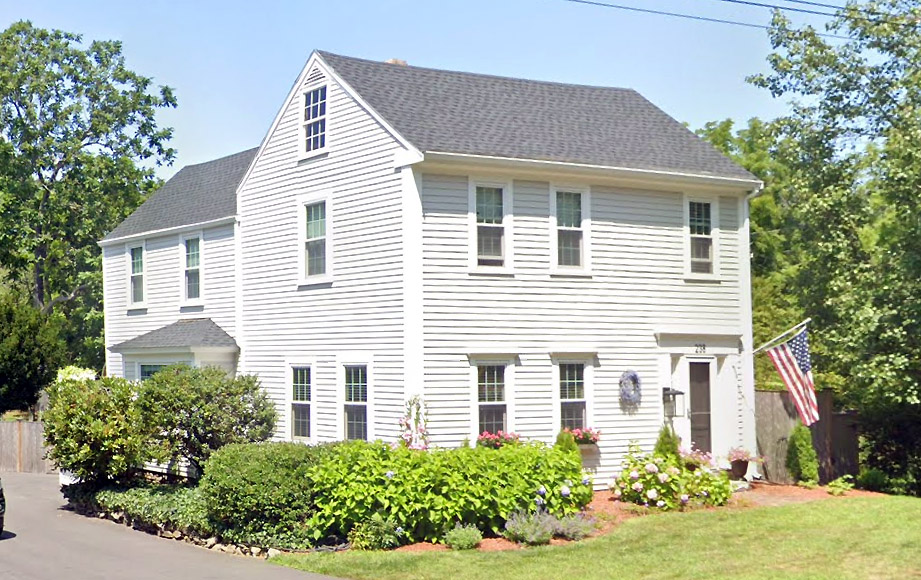
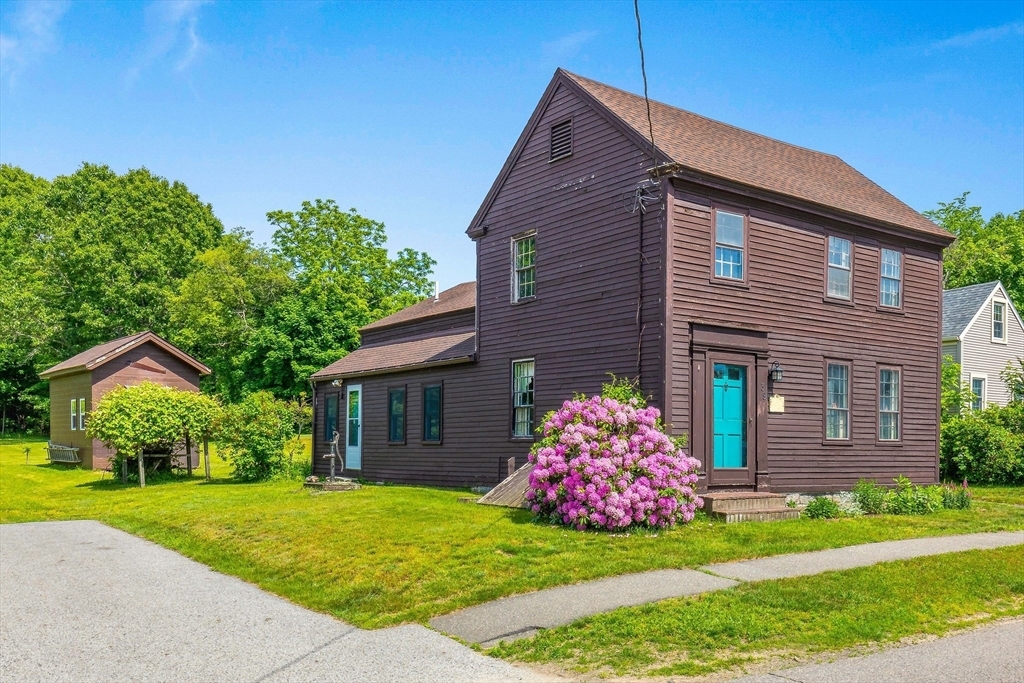


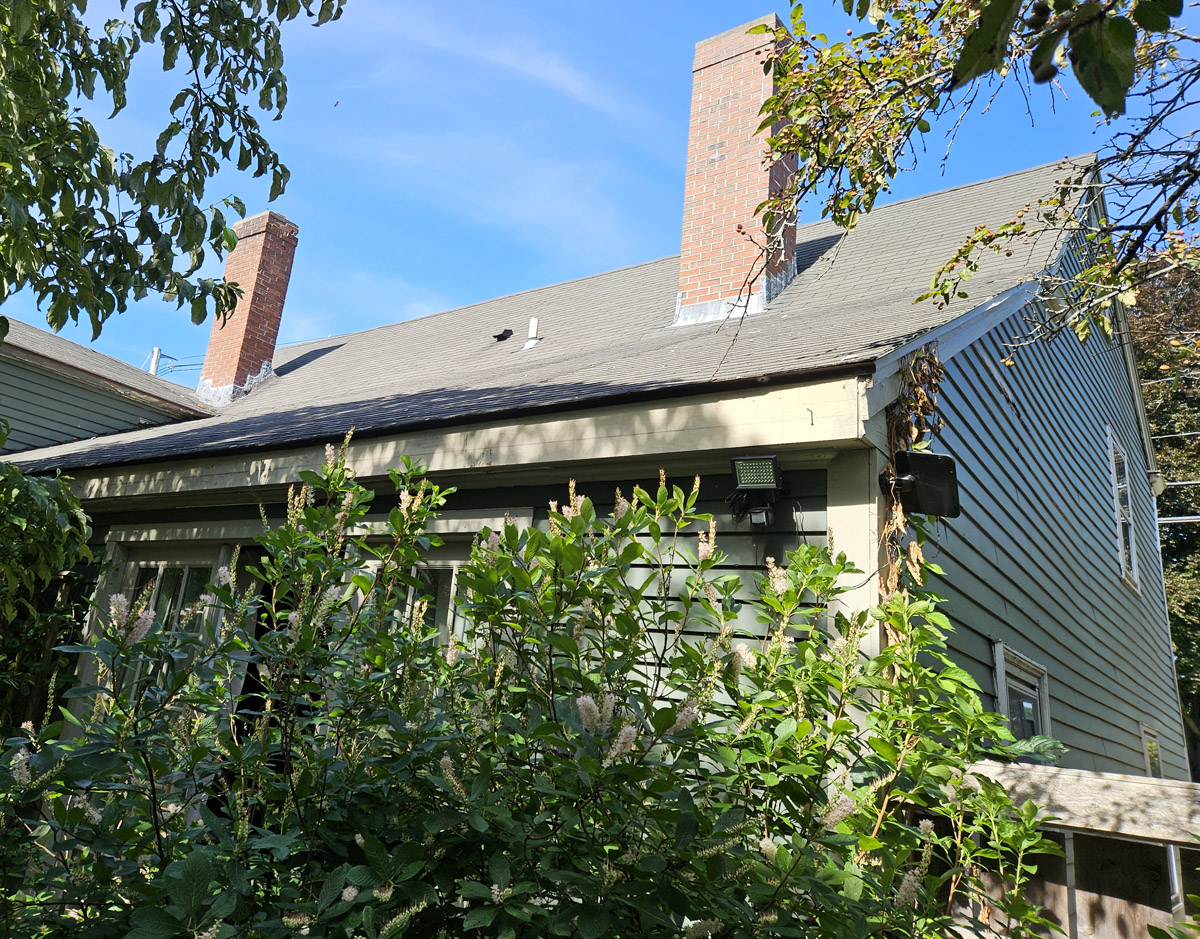
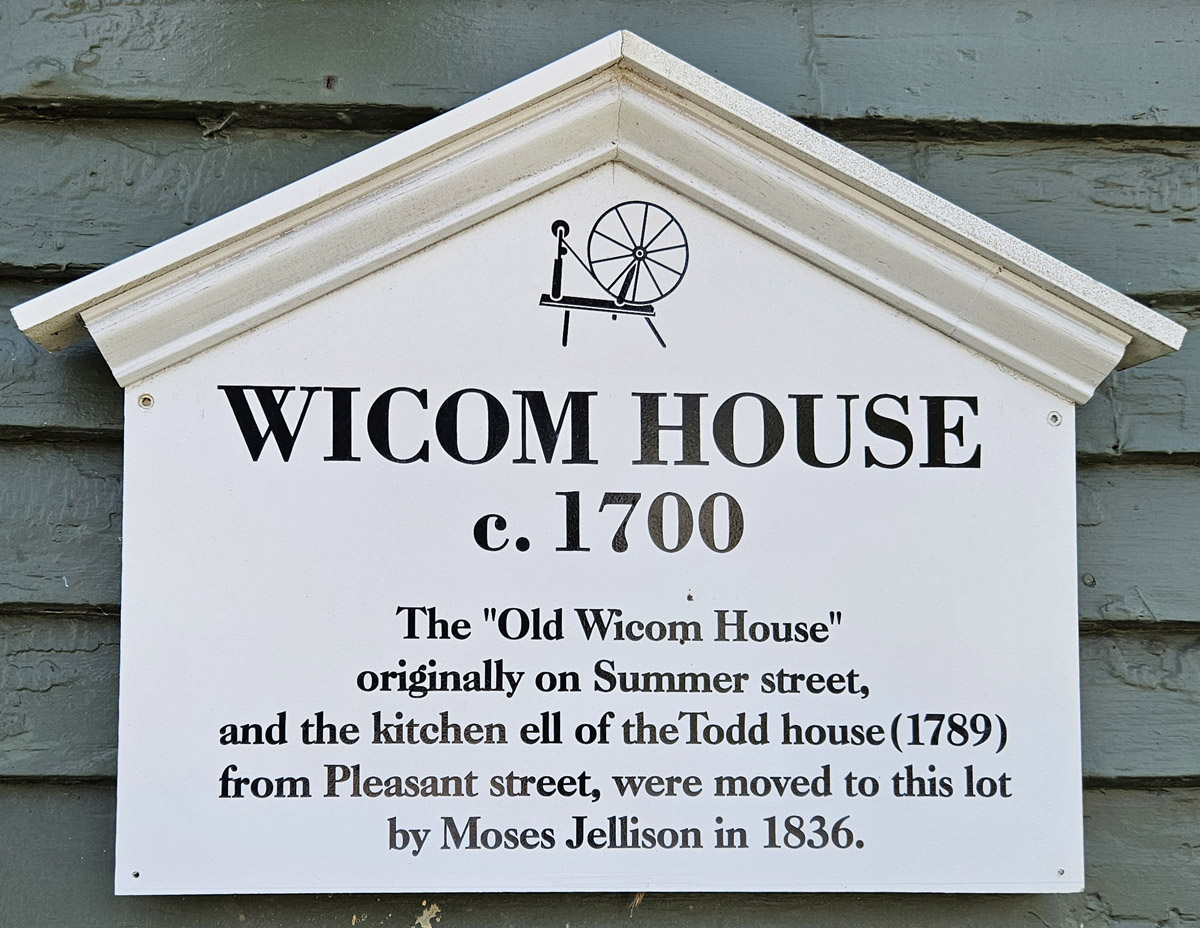


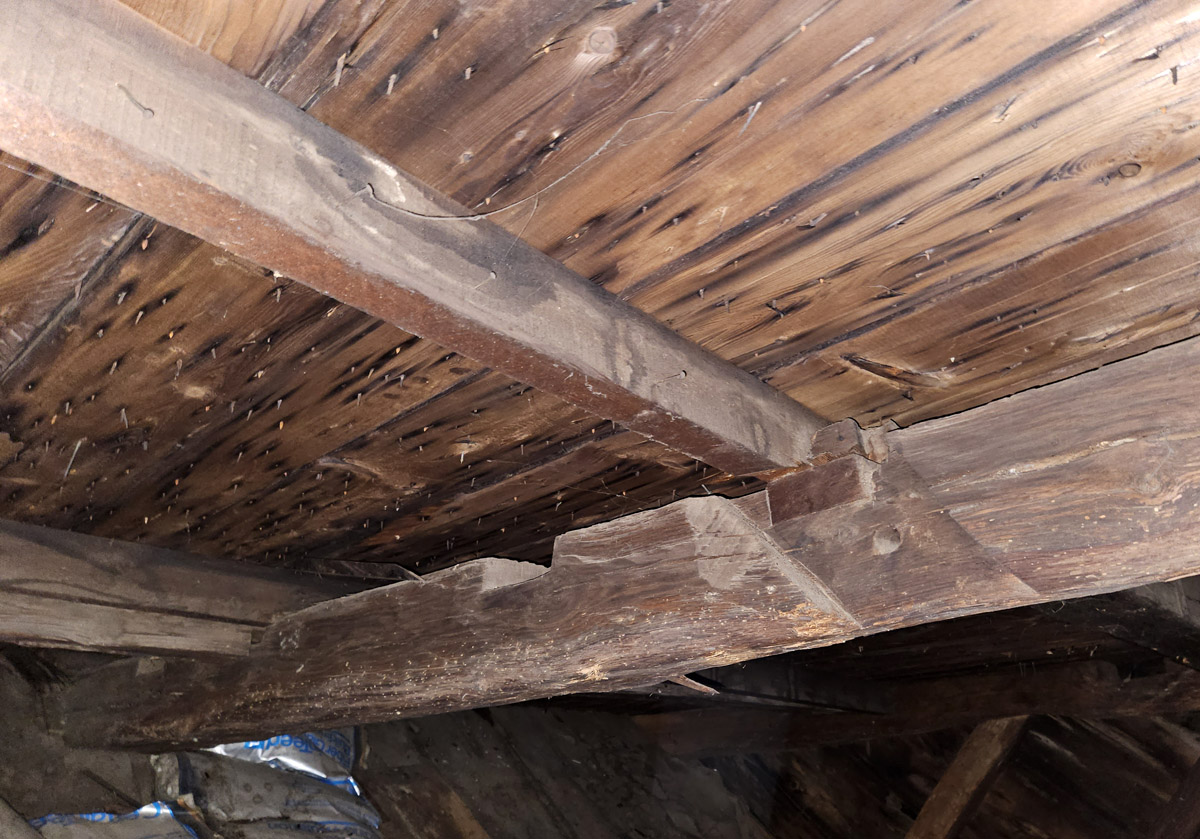
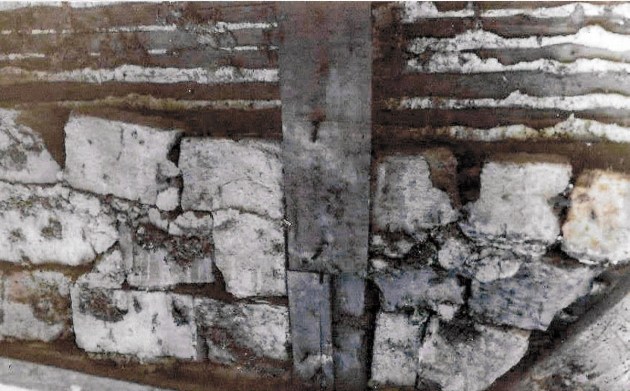


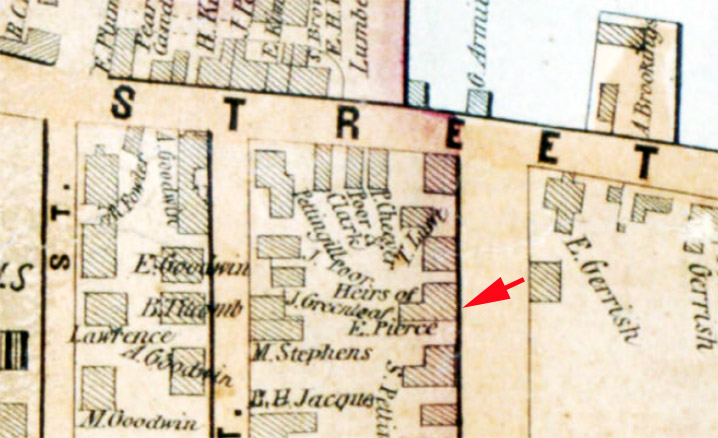

 ” by Abbott Lowell Cummings.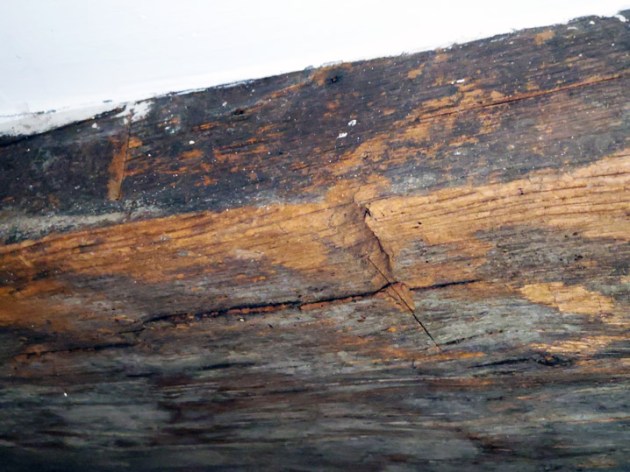

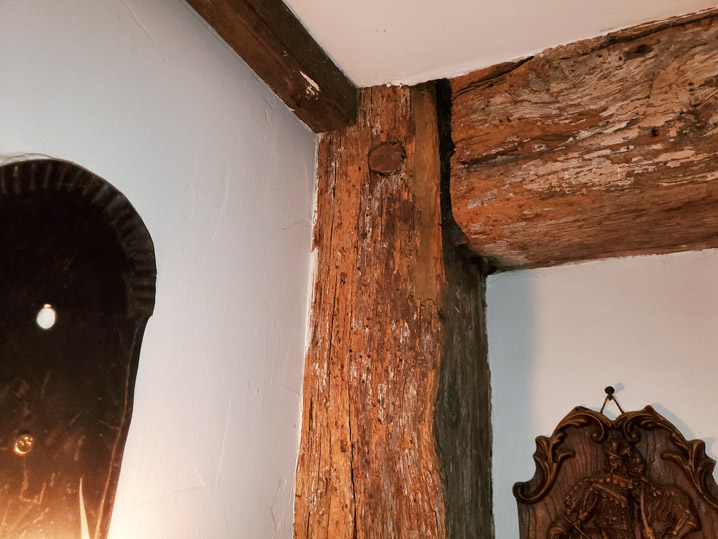


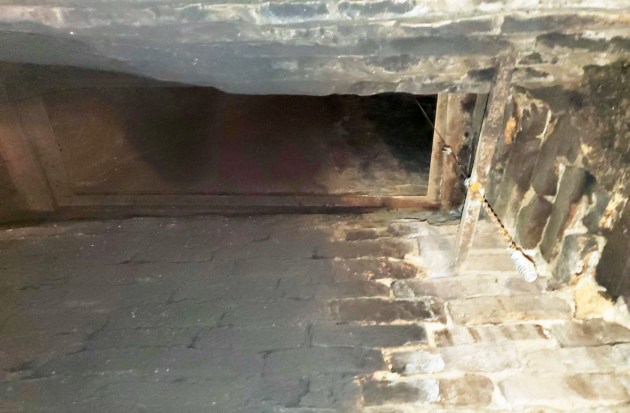


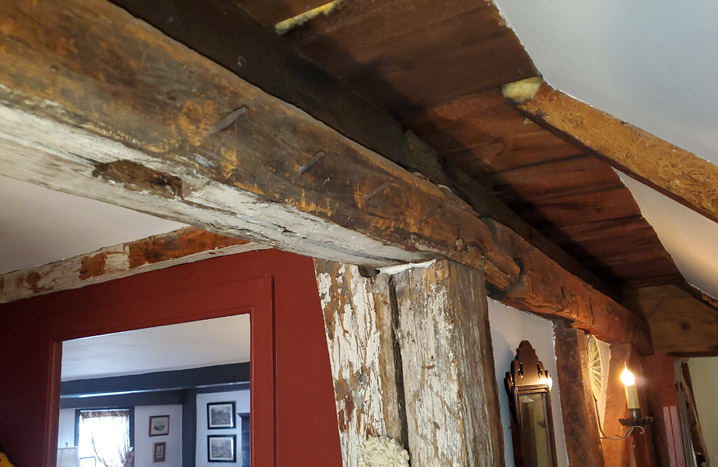


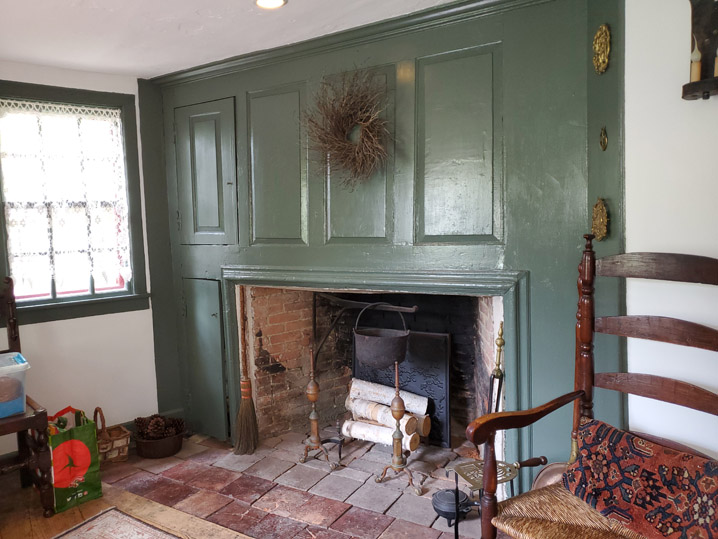

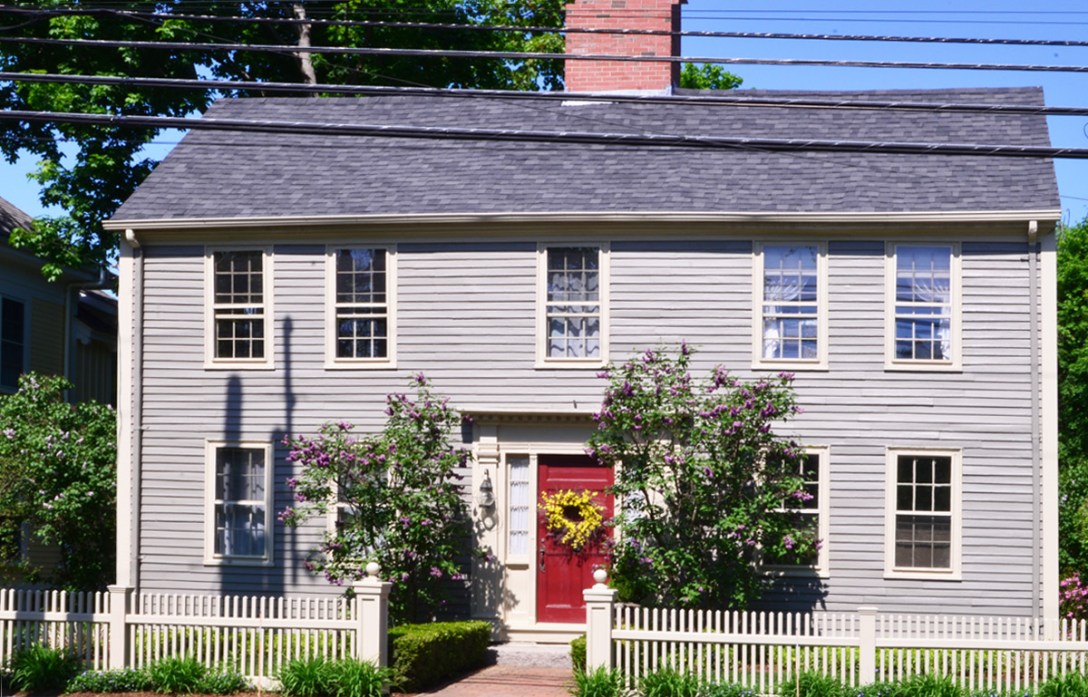

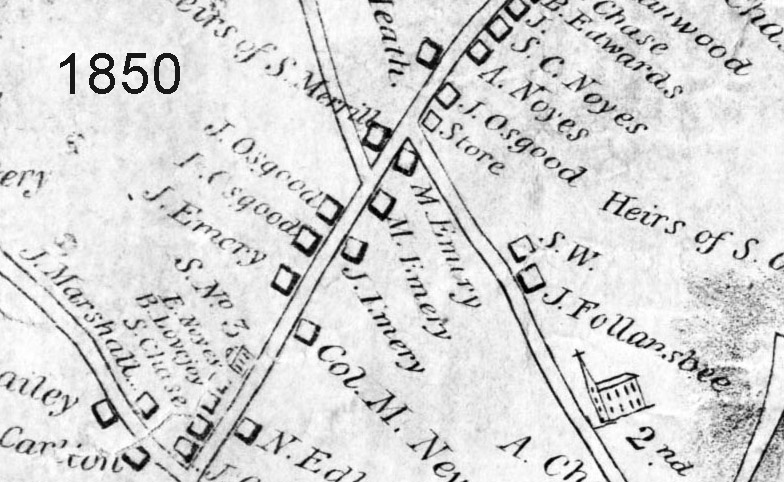

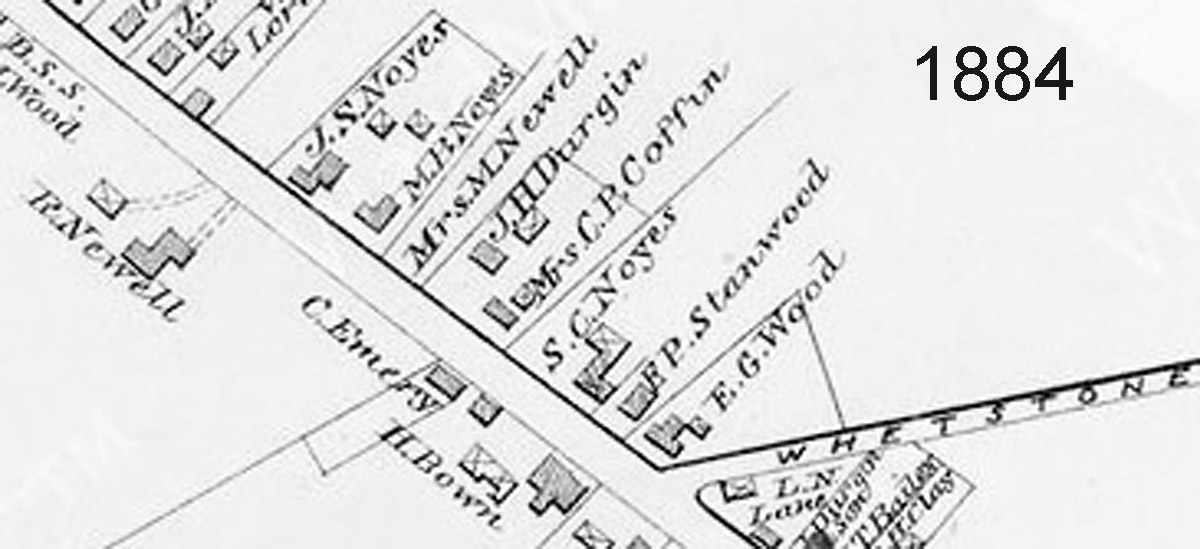
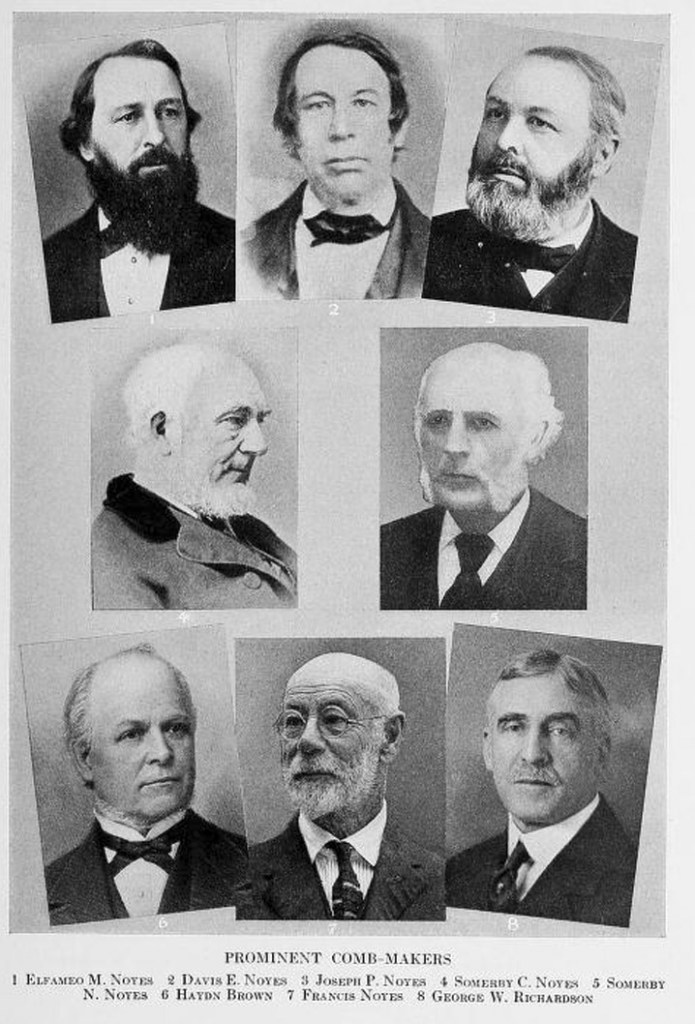


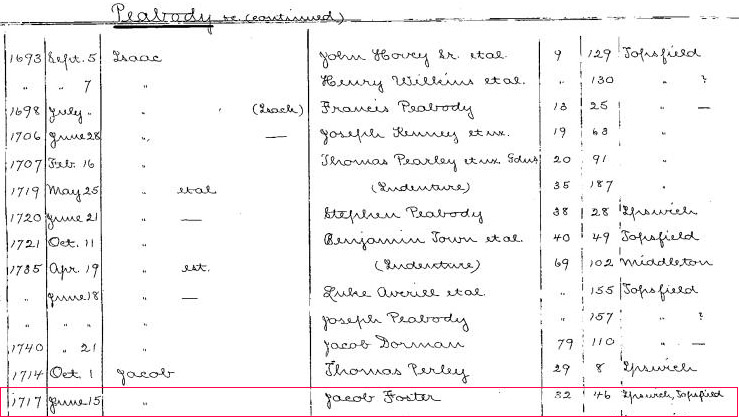


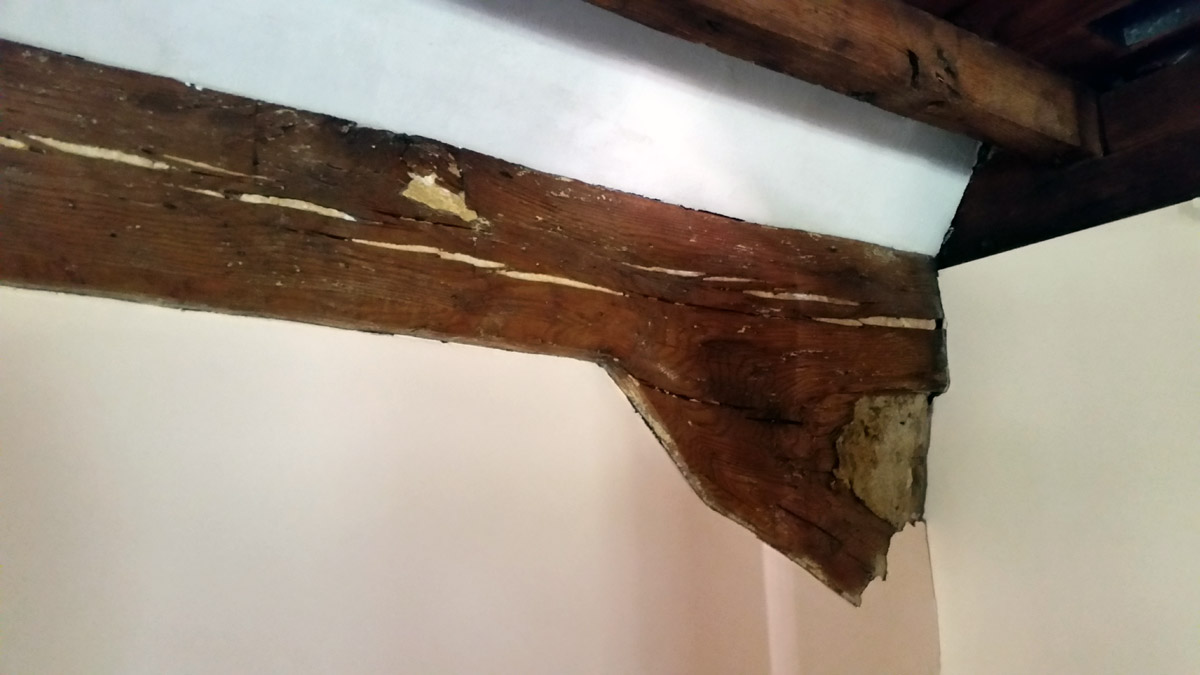

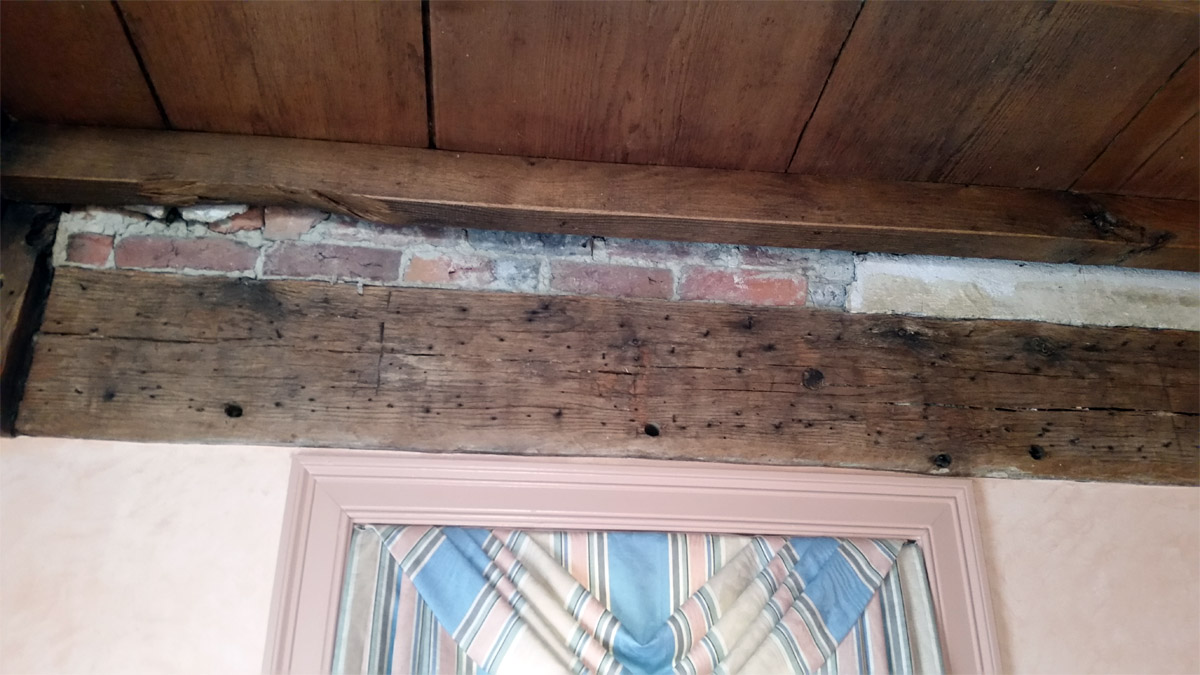
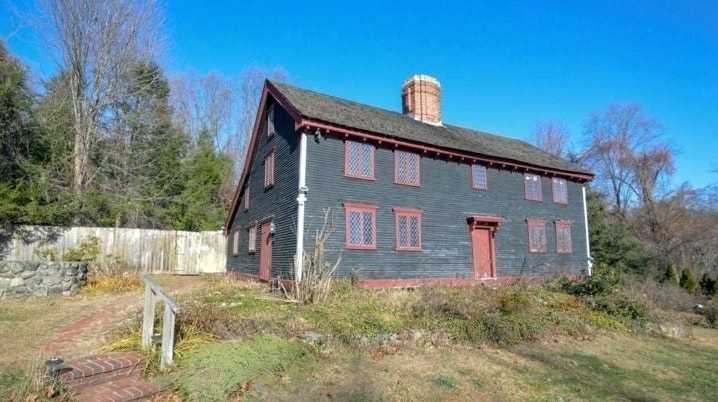
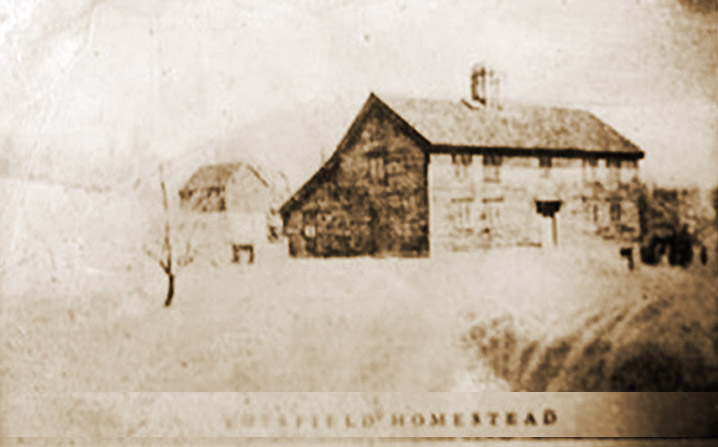

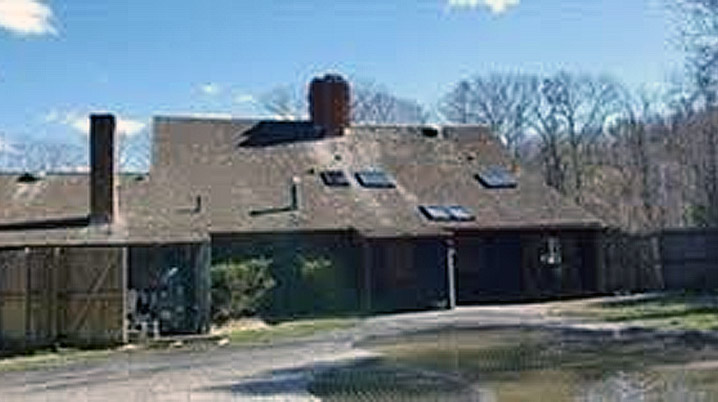


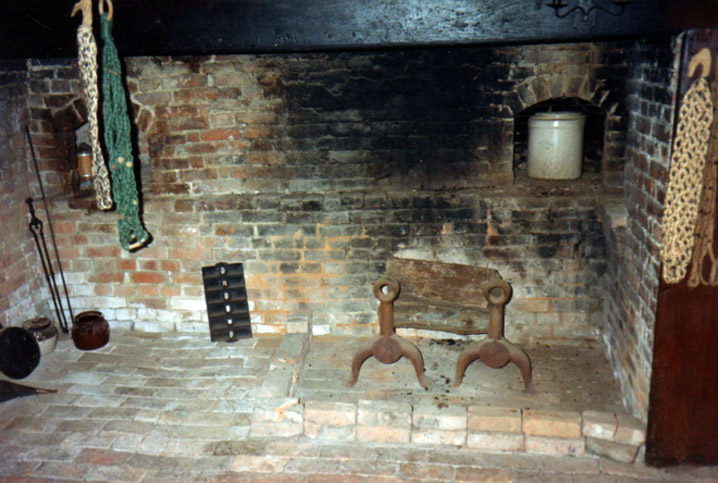


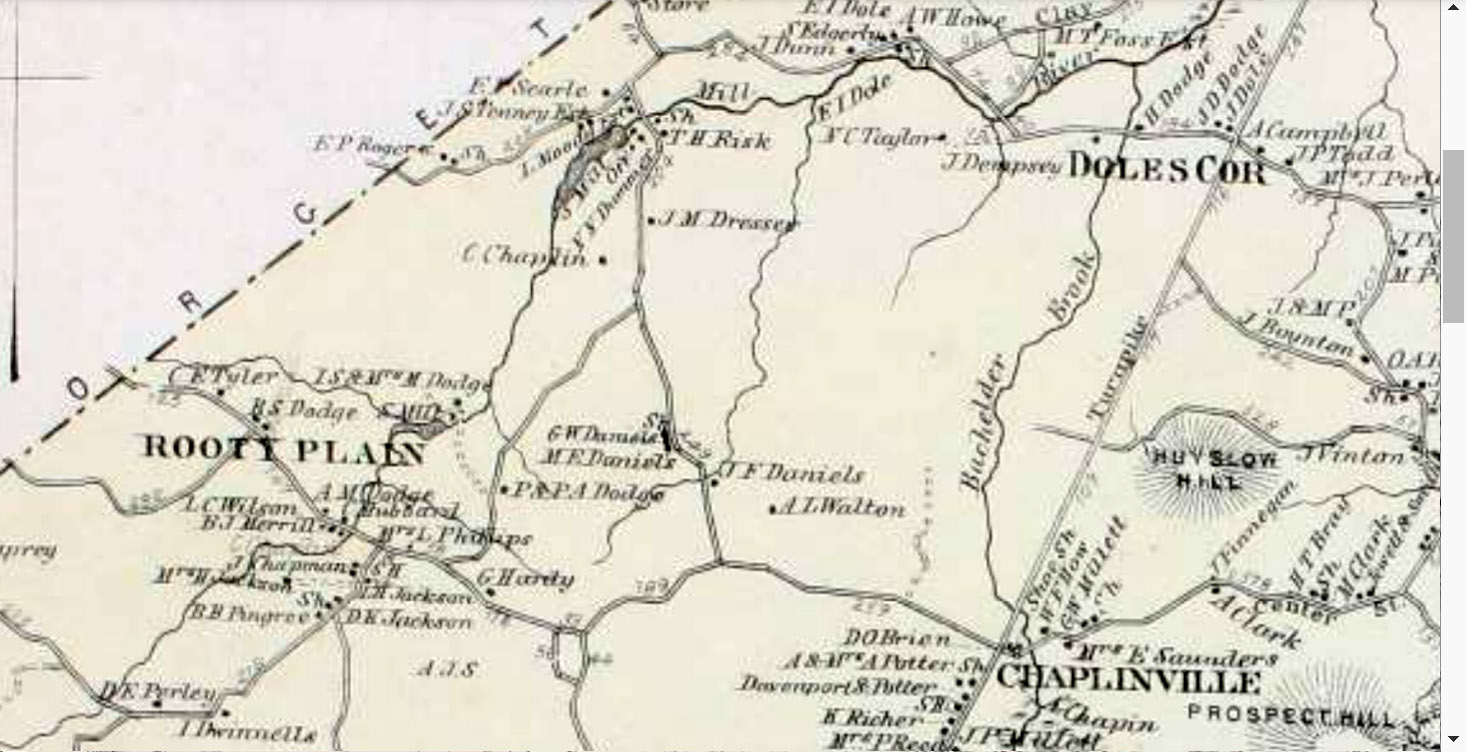

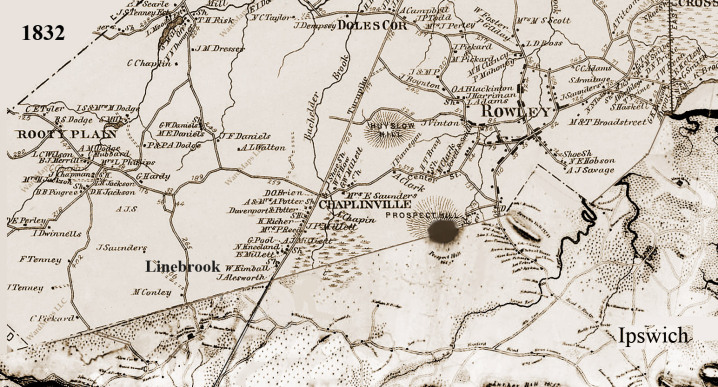


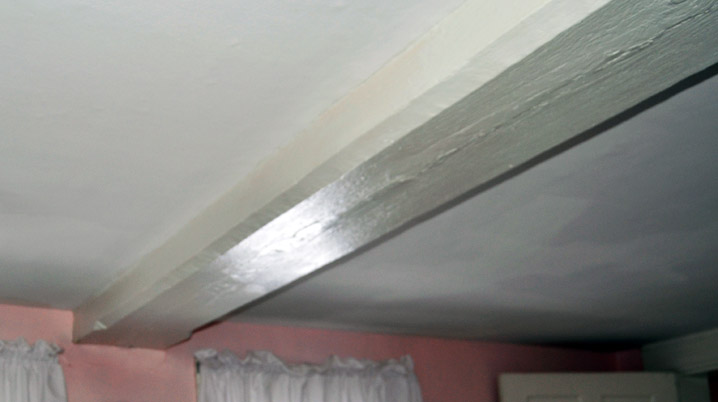
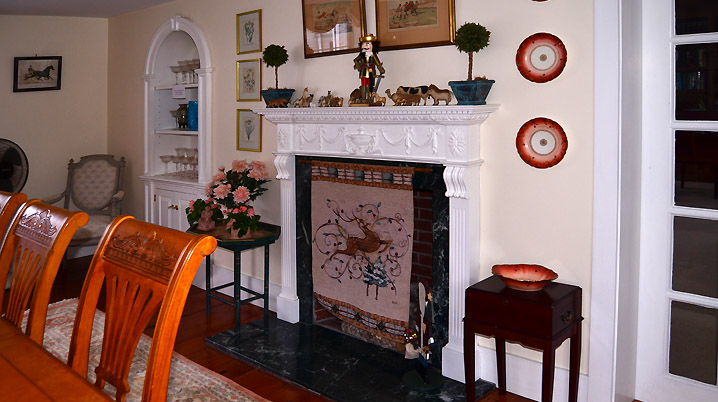
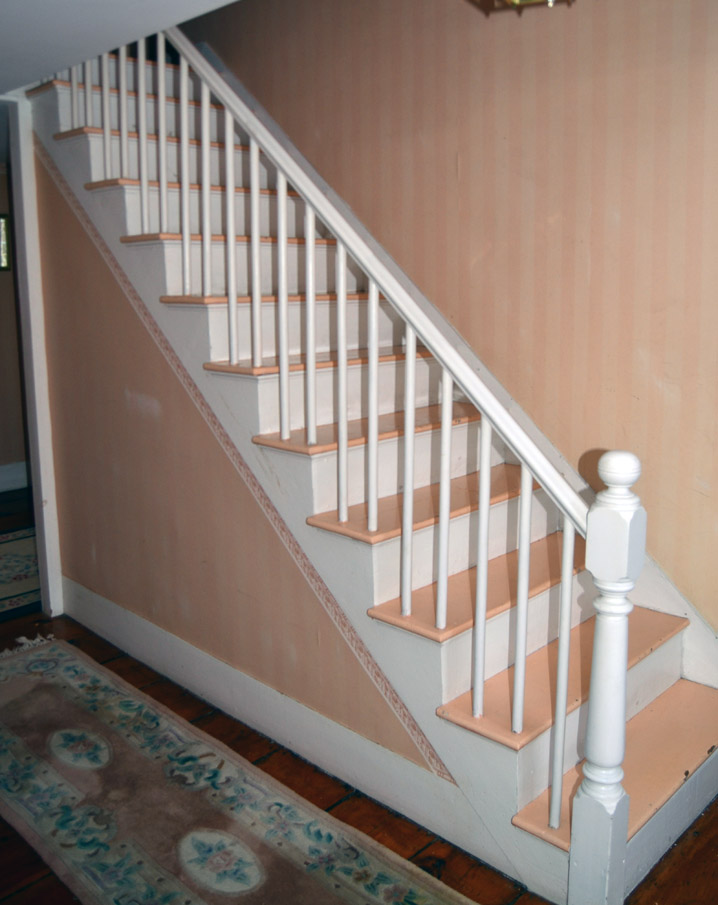

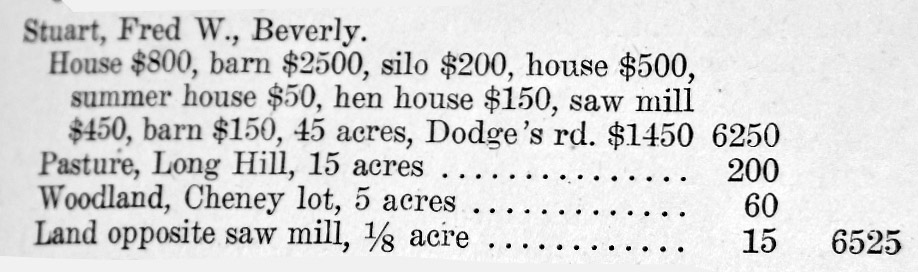


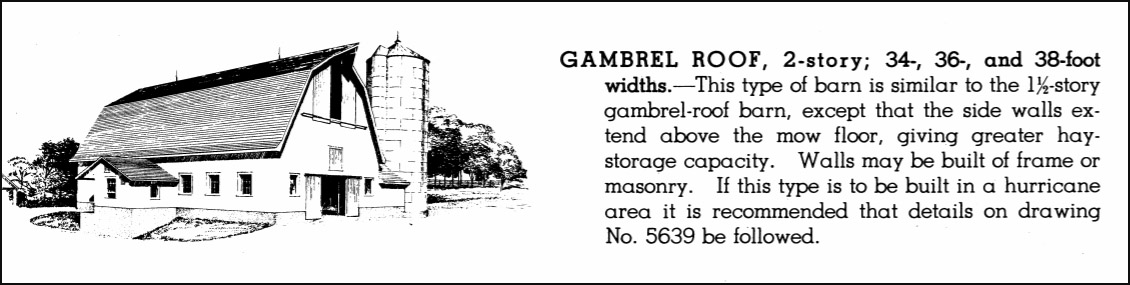


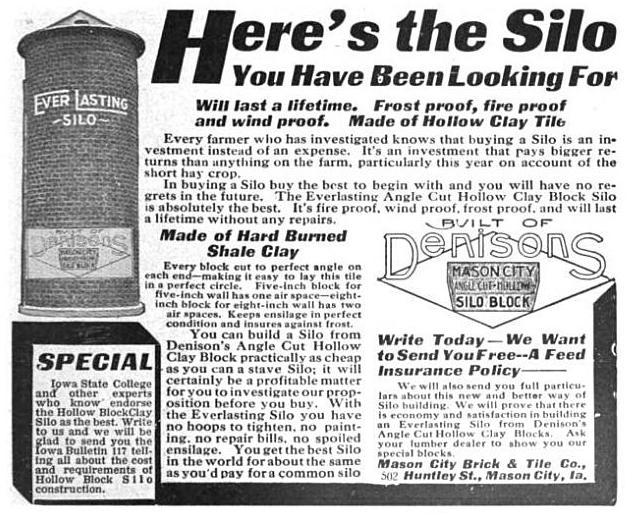


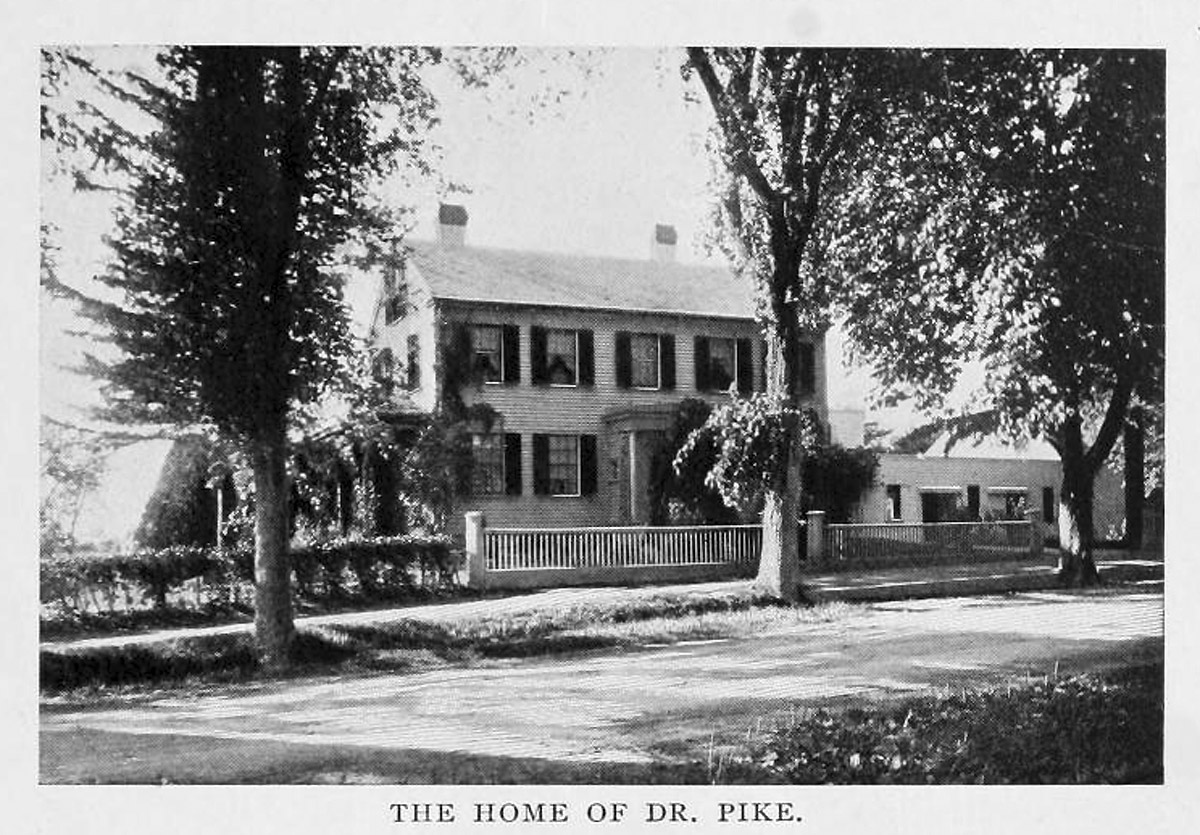
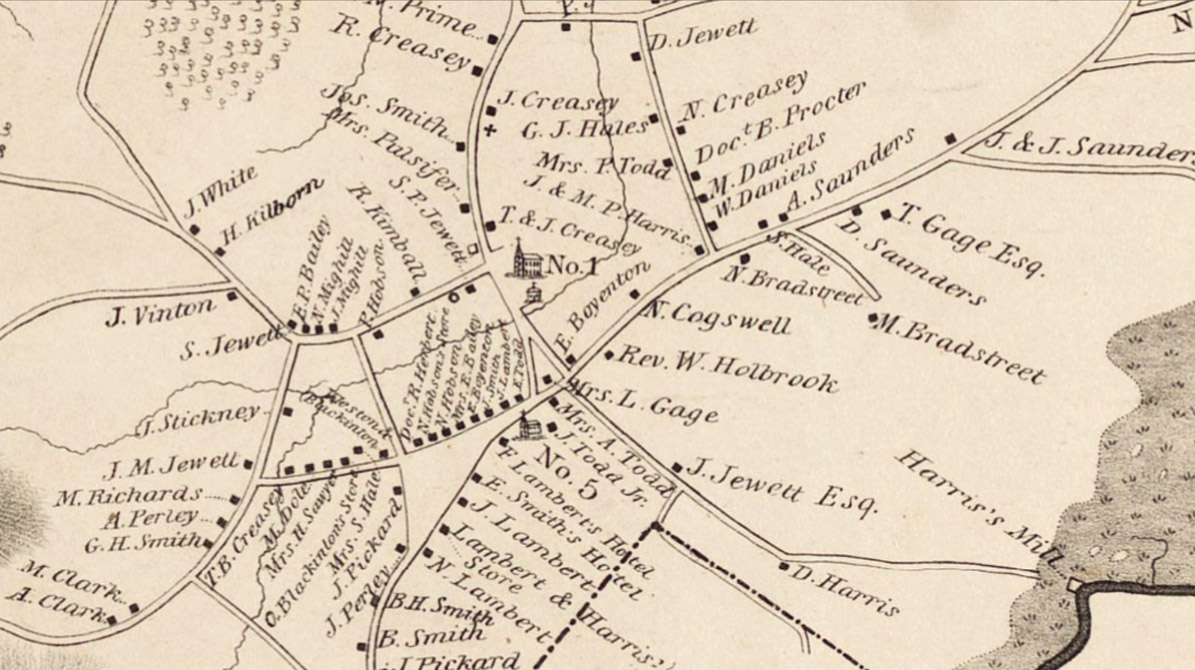

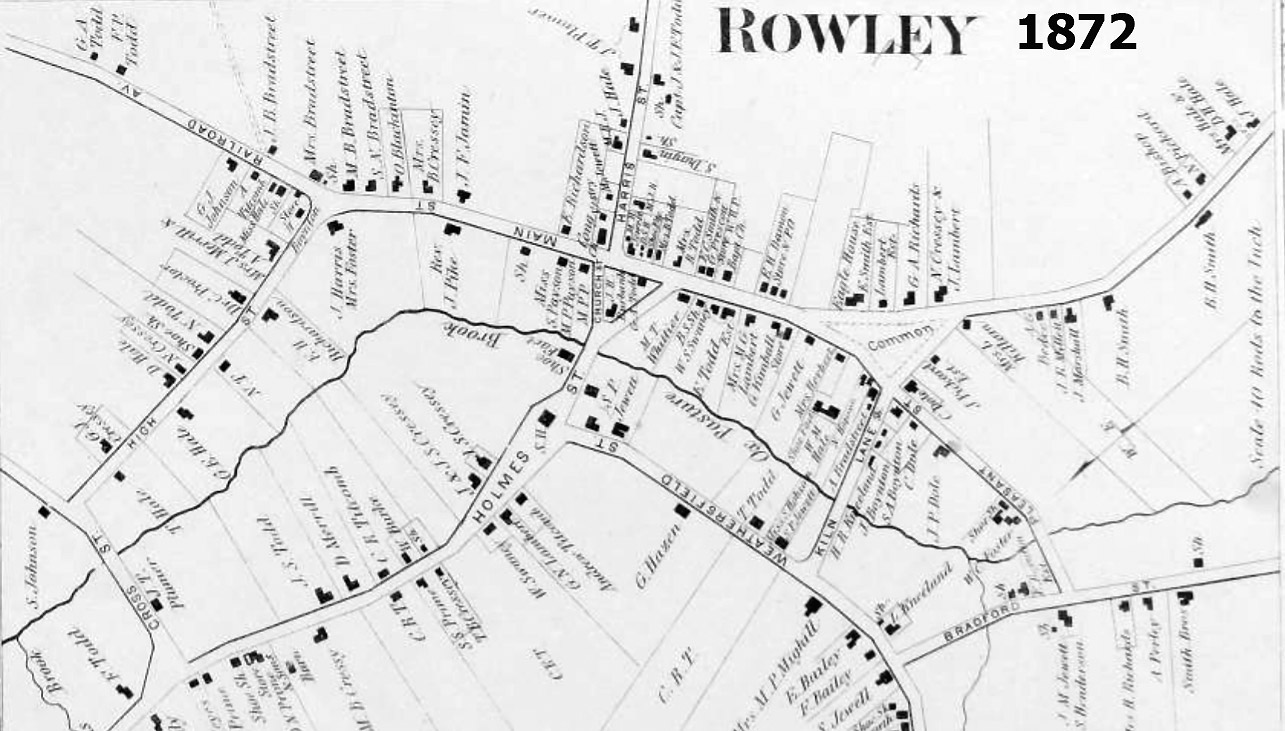


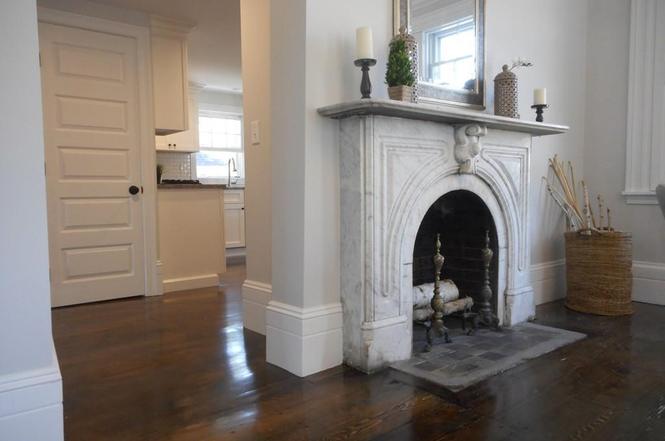
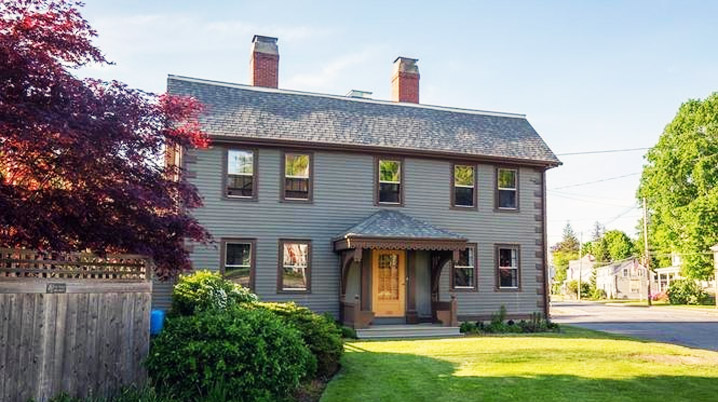


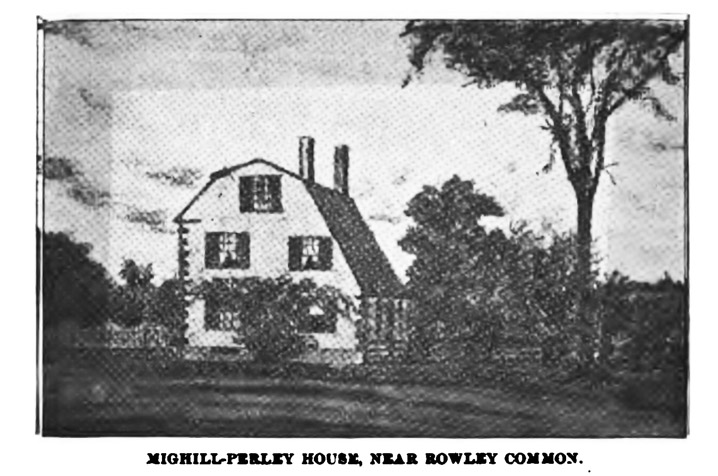


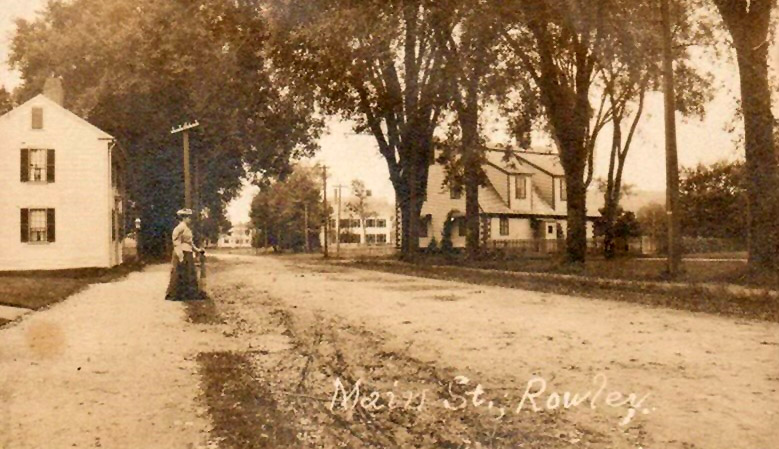


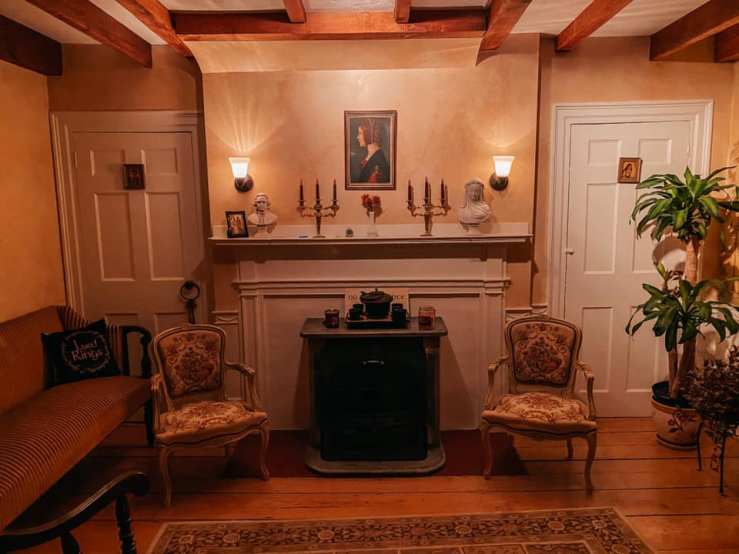
 17th & 18th Century Houses of Essex County, Massachusetts